Six NFL Betting Strategies That Actually Work
By Matt Downs · September 9, 2026
Most NFL betting advice is about picking winners. None of these six are. Every one of them is about the price you are handed and whether it is wrong.
These are the six methods run daily through the 2025 and 2026 seasons. November 2025 put 3,500 bets through 30 days for $14,083.76 booked at 1.81% ROI on a 1603-1915-14 record. That is what a profitable month looks like: a coin flip landing a hair over half the time, across a lot of bets.
1. Middling: two apps, two different numbers on one player
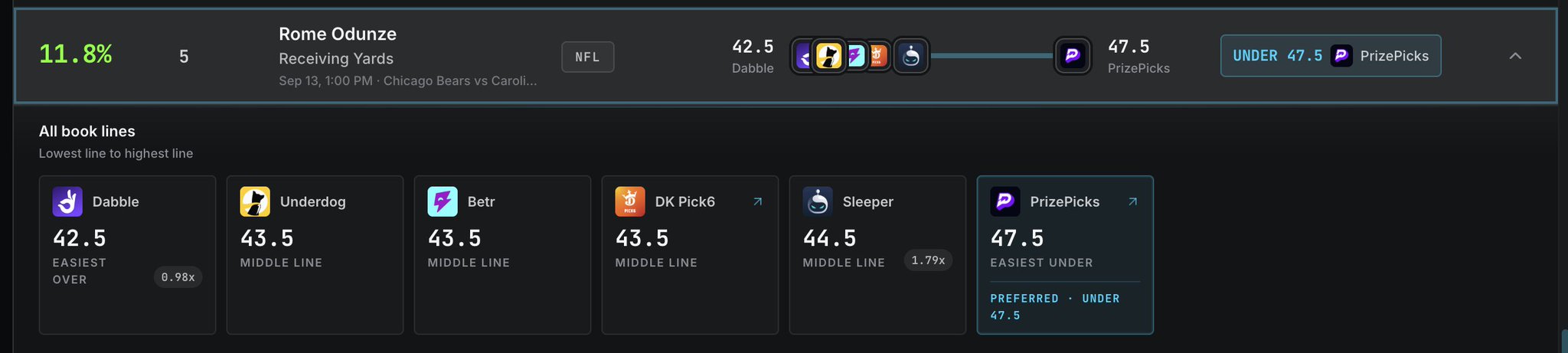
DFS apps do not copy each other. On the same NFL Sunday, Rome Odunze receiving yards was posted at 42.5 on one app and 47.5 on another.
Take the under 47.5 on the high app and the over 42.5 on the low one. If he finishes on 43, 44, 45, 46 or 47, both tickets cash. Anywhere else and one wins while the other loses, so the cost is roughly the vig.
The edge per play is small. The volume is not. Apps post hundreds of props a week and hundreds of them sit 3 or more yards apart, especially on receiving yards.
2. Line shopping the fixed-payout DFS apps
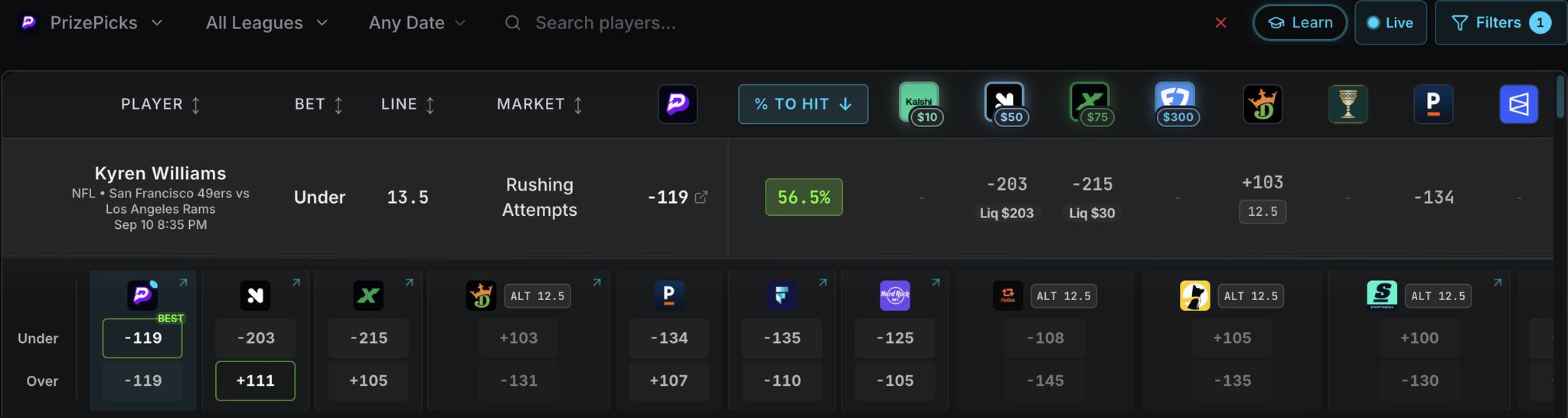
Fixed-payout apps charge the same price on every leg. PrizePicks charges -119 whether the true market says -105 or -160. That is the whole exploit.
Kyren Williams under 13.5 rushing attempts was -119 on PrizePicks. On the sharp books the same prop was -203, -215 and -134, and several books had moved the projection down to 12.5 entirely.
Break even on a 6-pick Flex is 54.2% per leg. A -150 leg after removing the vig is closer to 58%, which is one line in a no-vig calculator. The gap between those two numbers is the edge, and it exists only because the payout is fixed.
3. Correlation, and checking the payout before you build
A quarterback going over on passing yards and his WR1 going over on receiving yards are positively correlated. When the offense clicks, both hit. When it stalls, both miss.
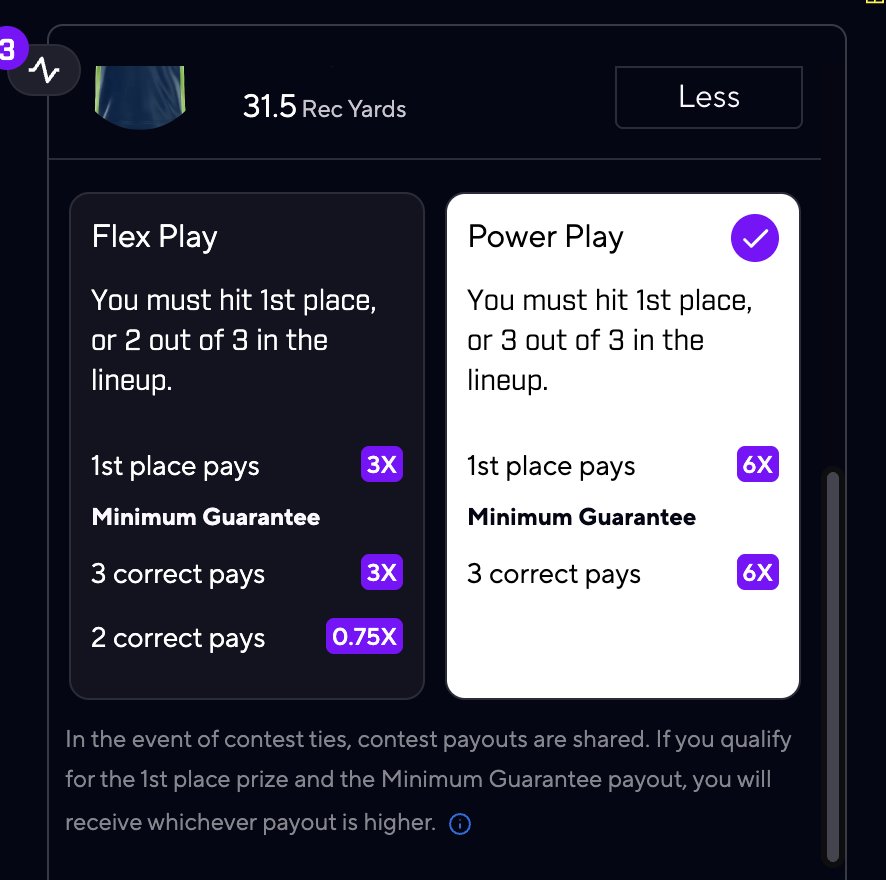
The apps know this. Power Play multipliers get trimmed on the obvious combinations, which is why the payout has to be checked before the slip is built, not after.
The combinations worth entering are the correlated ones the app has not priced for. A pass-heavy game script paired with lower rushing attempts is real correlation, and on this three-man stack the Power Play multiplier stayed at the standard 6X.
4. Tailing sharp money on the exchanges
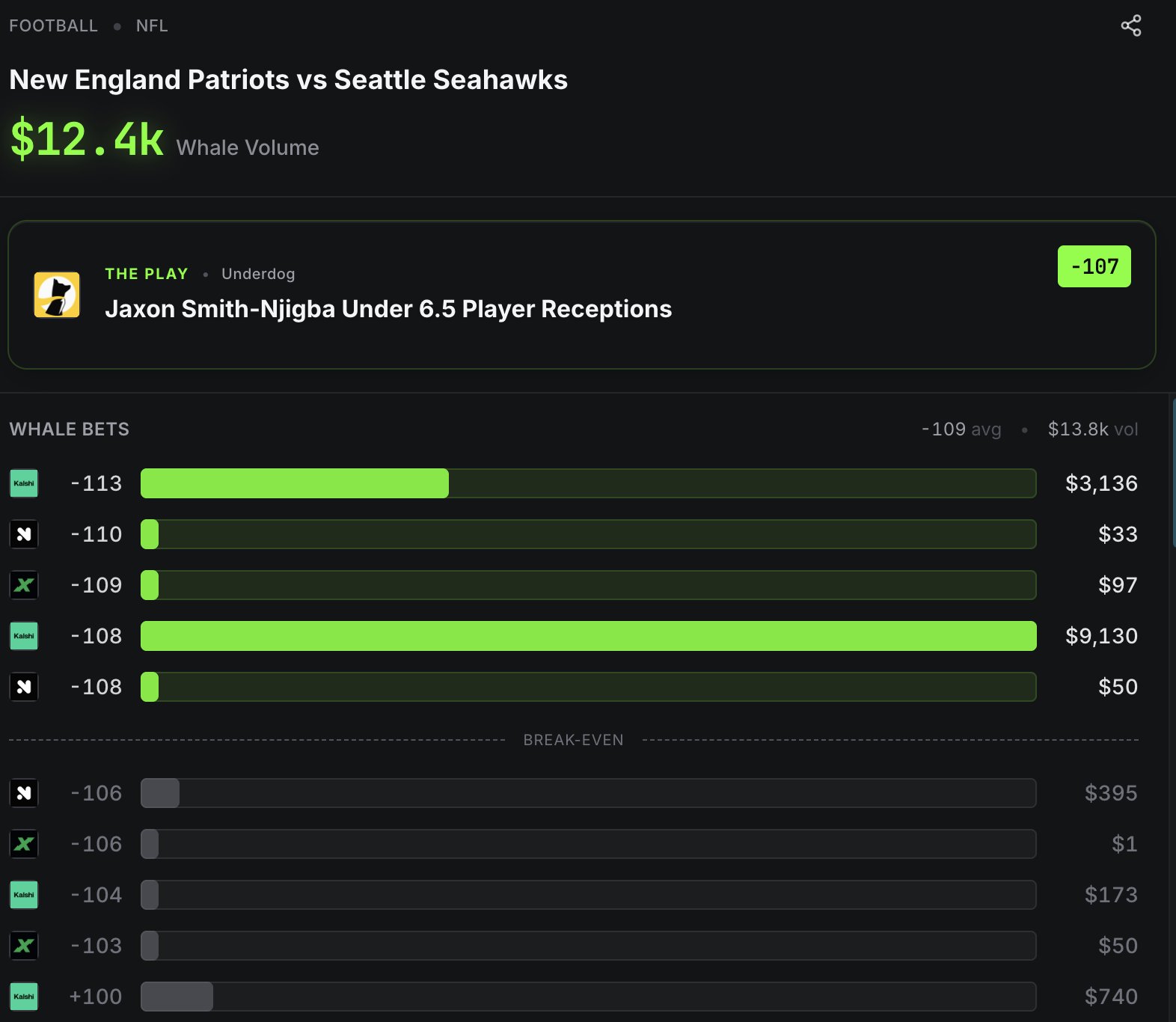
Exchanges publish who is betting what. When a market maker puts $12,400 through one player prop at -108 to -113 during the day, that is a professional stating a price and backing it with size.
On one Patriots and Seahawks prop, $9,130 filled at -108 and another $3,136 at -113, with the average landing at -109. If a DFS app still has the same prop at -107, the research is already done.
This works because exchange order flow is visible and sportsbook order flow is not. The exchange is telling you where the sharp price is.
5. Letting software scan the market
There are millions of dollars of pricing models already sitting in the industry, baked into every sharp exchange and sportsbook on the board. None of it needs rebuilding.
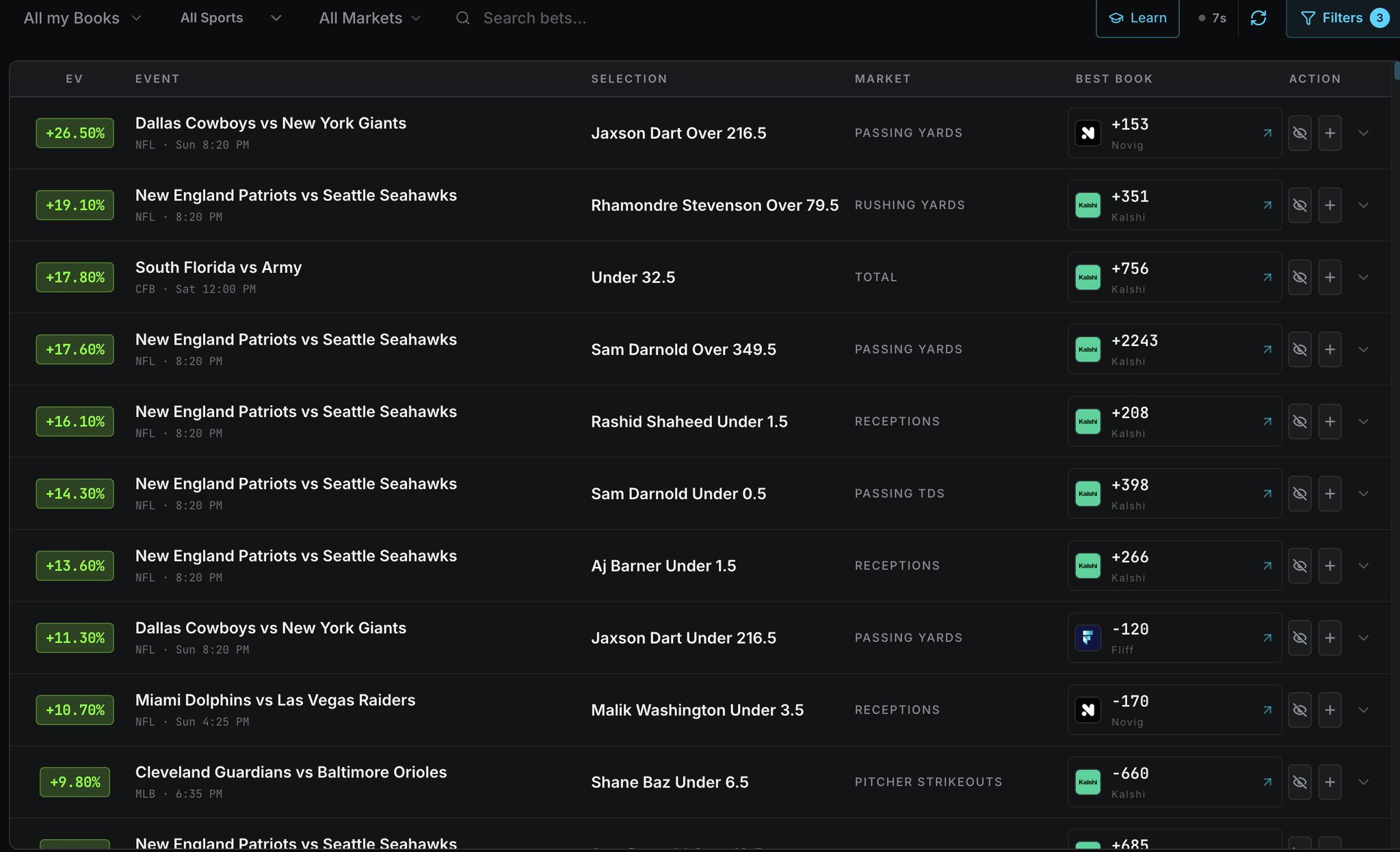
What is needed is a scan that compares the whole market to every book and sorts every prop by how far the best available price sits from fair. Doing that by hand across dozens of books and thousands of props is not realistic.
The output is a ranked list. The top of it on one NFL slate ran from +26.5% down to under 10%, each row naming the book holding the number. Any single row can be checked by hand in an EV calculator.
6. Market making: setting the price instead of taking it
The first five strategies are about taking a price someone else posted. This one is about posting your own.
On Novig, Kalshi and ProphetX you can put up your own odds. If the sharp line is -115 both ways, sit at -112 on the over and -112 on the under and wait. Whichever side fills, the fill is a few cents better than fair. Fill both sides and the position is locked either way.
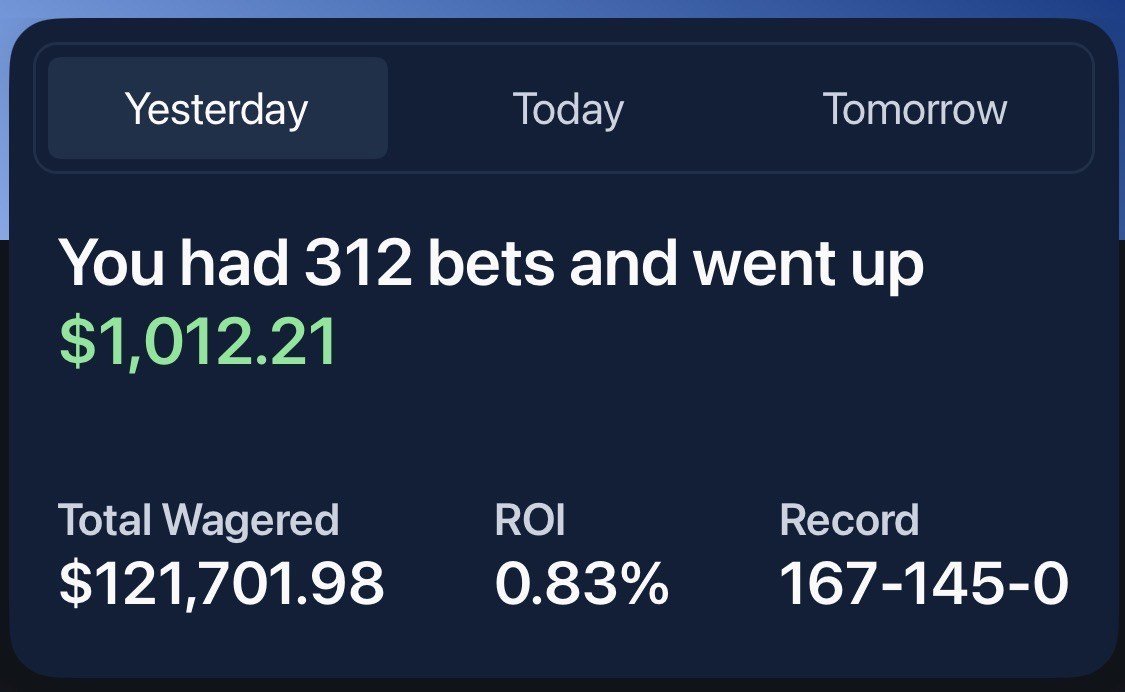
This is where volume comes from. 312 bets in a single day, $121,701.98 wagered, up $1,012.21 at 0.83% ROI. No sportsbook lets that much through. On an exchange the volume arrives on its own, in small pieces, a couple hundred dollars at a time.
The six, side by side
| Middling | Two apps post different lines. Take both sides and win the gap. | |
|---|---|---|
| Line shopping fixed payouts | The app charges -119 no matter what. Find legs the market prices at -150. | |
| Correlation | Stack correlated outcomes the app has not trimmed the multiplier for. | |
| Tailing sharp money | Exchange fills show the professional price. Take the same side cheaper. | |
| EV scanning | Sort every prop by distance from fair. Work the top of the list. | |
| Market making | Post your own odds a few cents inside fair and let volume come to you. |
Frequently asked questions
What is middling in sports betting?
Middling means taking both sides of the same market at two different numbers, so there is a range of outcomes where both bets win. If a receiving-yards prop is 42.5 on one app and 47.5 on another, betting the over on the low line and the under on the high one wins both if the player finishes between them. Outside that range one side wins and one loses, so the cost is roughly the vig.
Why can you beat fixed-payout DFS apps by line shopping?
Fixed-payout apps charge the same implied price on every leg regardless of the true market. If the app charges -119 on a leg the sharp market prices at -150, that leg is roughly 30 cents underpriced. Break even on a six-pick Flex is about 54.2% per leg, and a -150 leg after removing vig is closer to 58%, so the gap is the edge.
Does correlation always help a DFS slip?
No. Apps trim the payout multiplier on obvious correlated combinations, which cancels the benefit. The combinations worth entering are correlated ones the app has not adjusted for, which is why the payout should be checked before the slip is built.
What does tailing sharp money mean on a betting exchange?
Exchanges publish order flow, so you can see the size and price of individual fills. When a professional puts five figures through one prop at a given price, that is a stated opinion backed by money. If another book or app still offers the same side at a better number, taking it means using research that has already been done.
What is market making in sports betting?
Market making means posting your own odds on an exchange instead of accepting the ones on offer. If the fair line is -115 both ways, quoting -112 on both sides means any fill comes in a few cents better than fair, and filling both sides locks the position. It generates far more volume than a sportsbook would allow, at a very thin margin per bet.
Is a 1.81 percent ROI good in sports betting?
Yes, over enough bets. A 1.81% ROI across 3,500 bets in a month produced $14,083.76 on a 1603-1915-14 record. The win rate is close to a coin flip by design, because these strategies are about buying prices slightly better than fair rather than about picking more winners.