Original research · August 4, 2026
Day One Was Up $115 on 1-1. Day Seven Was 3-19-1 and Still Up.
By Matt Downs
Everybody argues about which picks to make. Almost nobody argues about how much to put on them, and that second question decides more months than the first one does.
Here is a real February card at three checkpoints, all flat $5 entries, so the only thing that varies is the calendar.
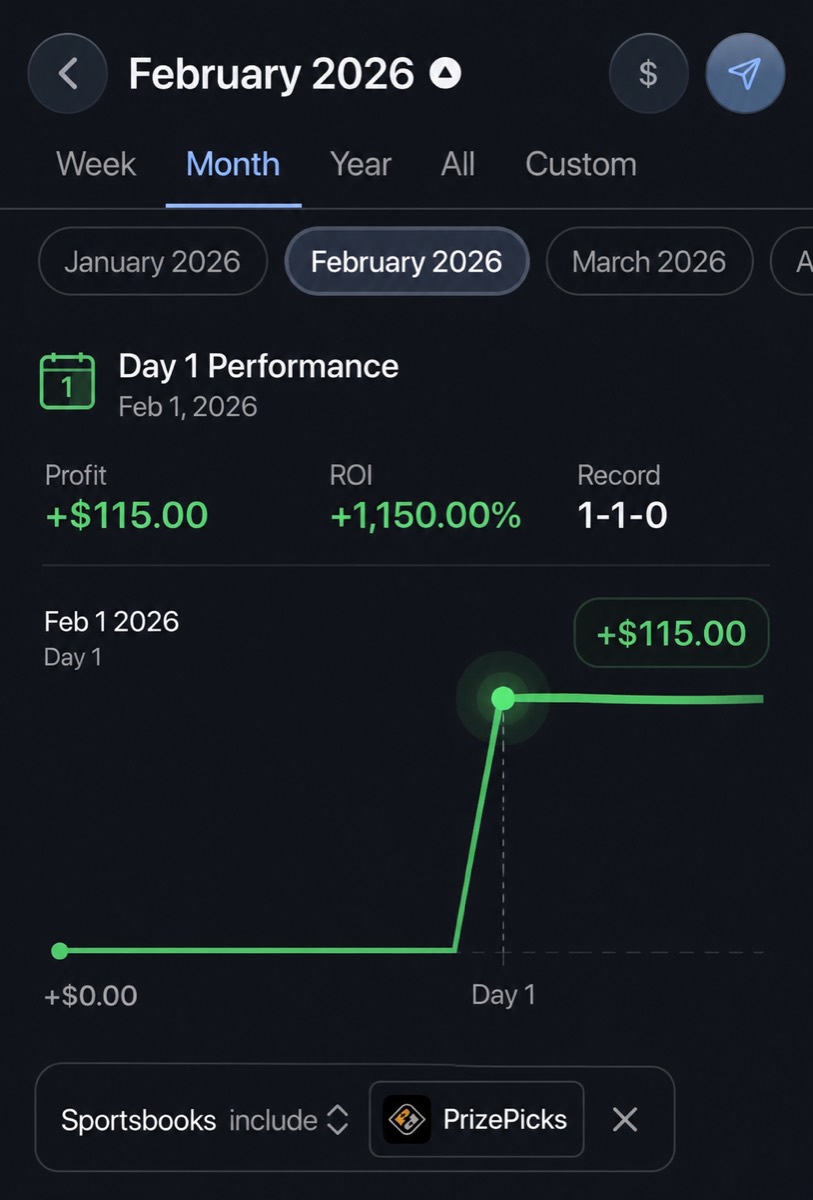
Day one: 1-1-0, up $115, a 1,150 percent return
Two entries. One won, one lost, and the card was up $115 on $10 staked. As a percentage that is a 1,150 percent return on the day.
This is the most dangerous screen in betting. Everything in you wants to conclude the method is printing and the stake should go up. The sample is two bets.
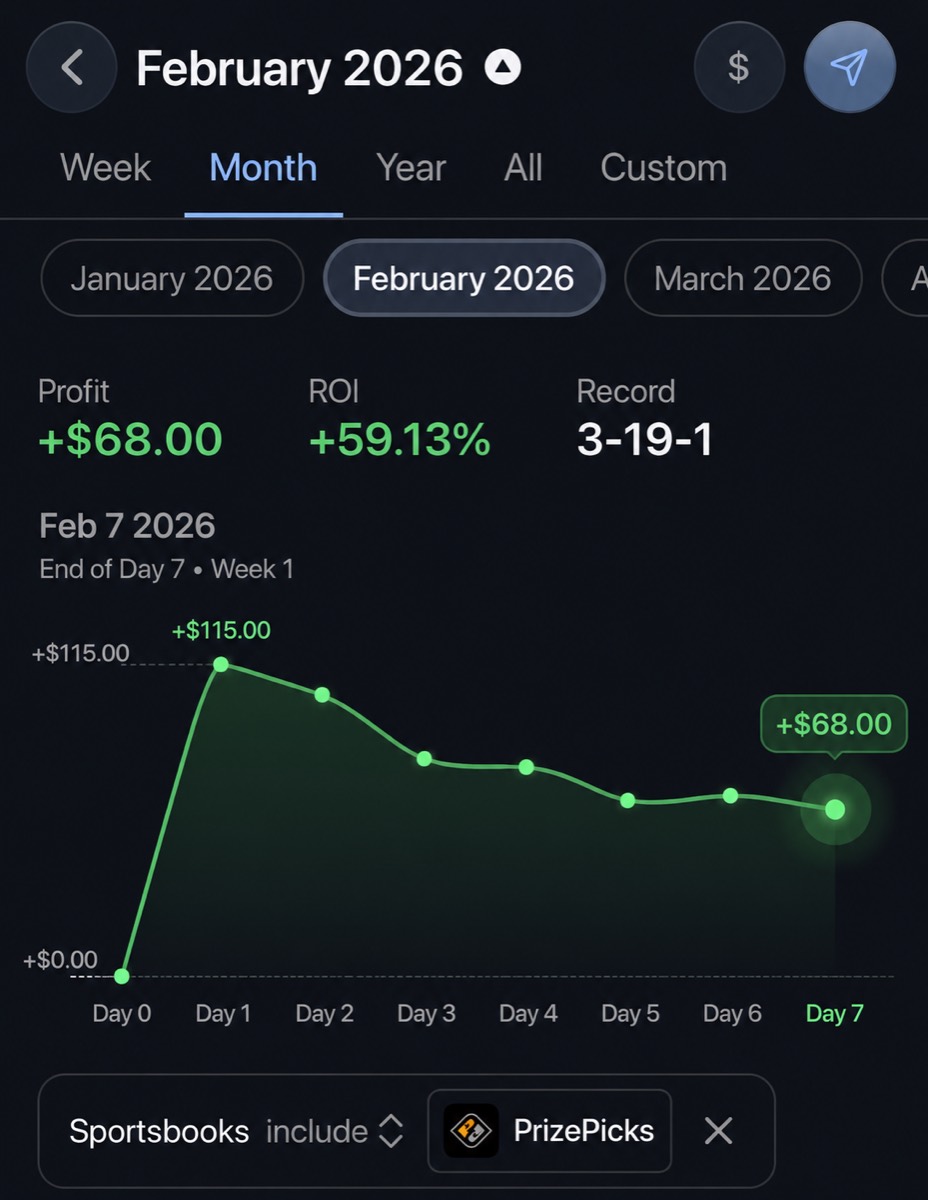
Day seven: 3-19-1, and still up $68
A week in, the record reads three wins against nineteen losses and a push. That looks like a disaster and it is not. The card is still up $68, because the winners came at prices long enough to carry the losers.
This is what a positive expected value week actually looks like from the inside. It does not feel like winning. It feels like being wrong constantly while the balance drifts upward.
The trap: what happens if day one changes your stake
Now replay the same seven days with one change. After day one's 1,150 percent return, the stake goes from $5 to $50. Identical picks, identical results, ten times the size.
Day seven is no longer up $68. It is down about $355. Nothing about the selections got worse. The only thing that changed is that the losing stretch, which was always coming, arrived at a size the bankroll could not absorb. Sizing decided the outcome, and the picks were a bystander.
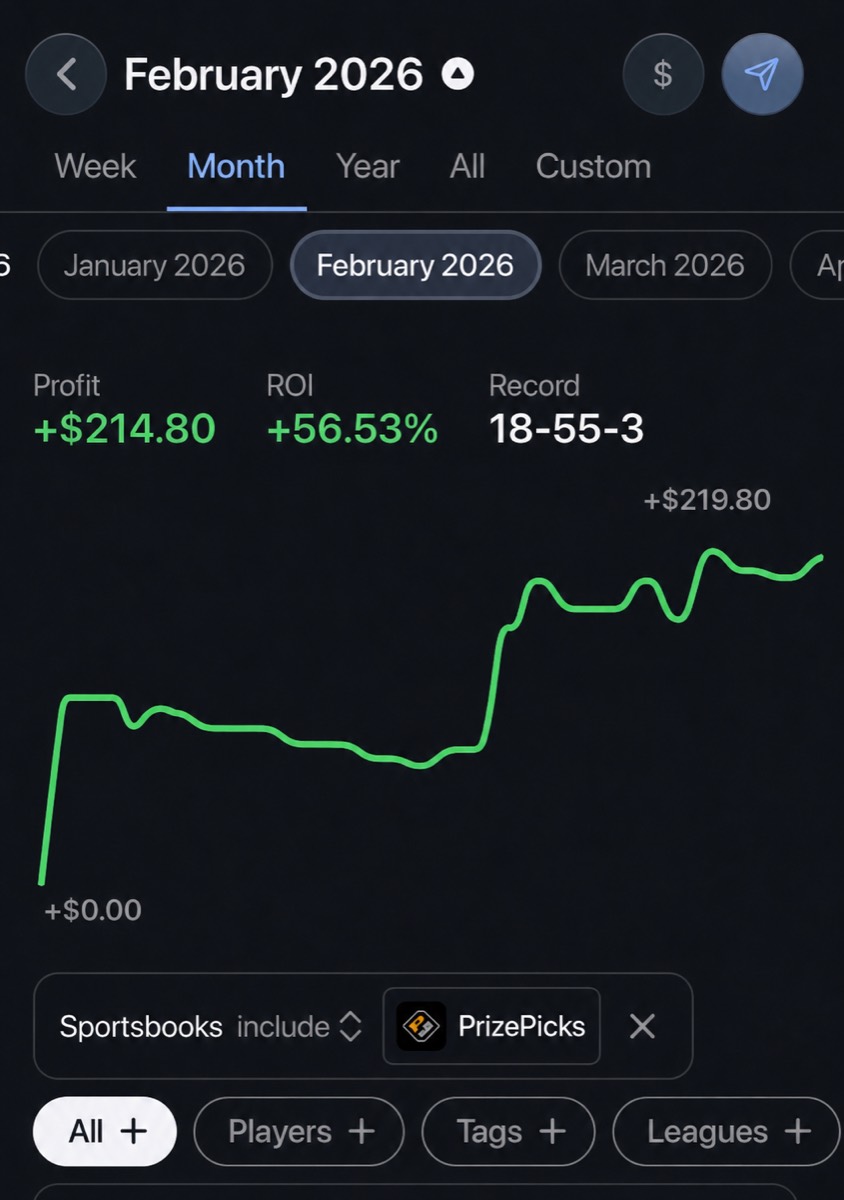
The month: 18-55-3, up $214.80
Seventy six entries, eighteen of them winners. A 23.7 percent hit rate, and the month finished up $214.80 on $380 staked, a 56.53 percent return.
A hit rate under a quarter is profitable when the prices are long enough, and that is the entire mechanism. If a bet pays +300, you break even hitting 25 percent. The question was never how often you win. It is whether the price justifies how often you win.
How to pick the number instead of guessing it
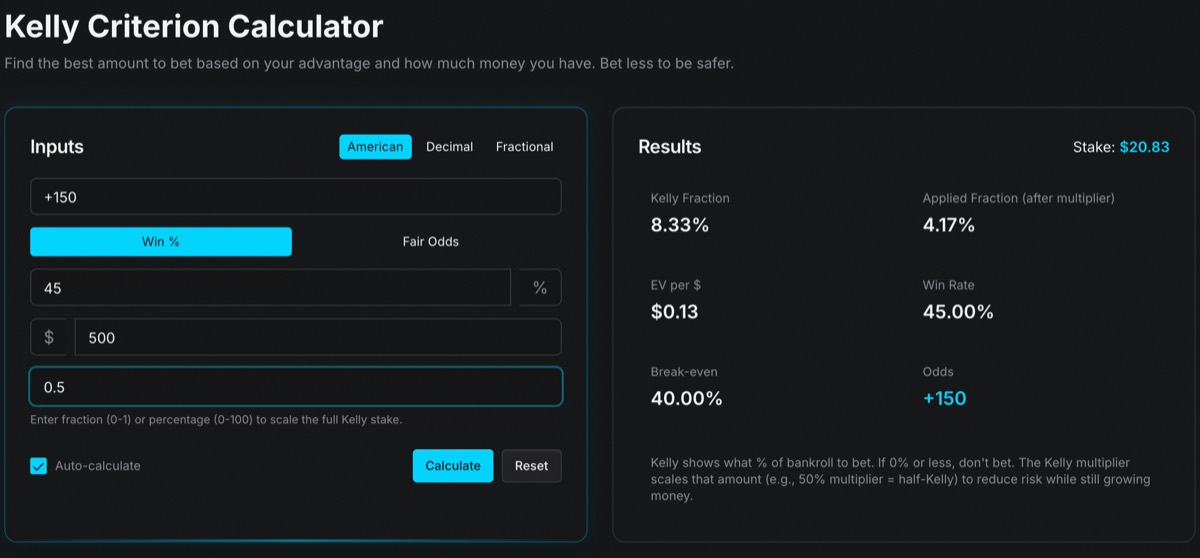
There is arithmetic for this and it is free. The Kelly criterion takes your edge and your bankroll and returns a stake that grows the roll as fast as possible without risking ruin.
A worked example: a bet at +150 that you believe hits 45 percent of the time, on a $500 bankroll, comes out at $20.83 per bet at half Kelly. Not $50, and not $5 either. Run yours in the free Kelly calculator. Most people who blow up a bankroll never had a wrong opinion about a game. They had a stake that was untethered to the size of the edge.
Frequently asked questions
Why does bet sizing matter more than picking winners?
Because a losing stretch is guaranteed and its damage scales with your stake. In the card shown here, the same seven days of identical picks finish up $68 at flat $5 entries and down about $355 at $50 entries. The selections did not change. Only the size did, and it flipped the result.
Can you be profitable hitting less than a quarter of your bets?
Yes, if the prices are long enough. The February card finished 18-55-3, a 23.7 percent hit rate, and was up $214.80 on $380 staked. A bet priced at +300 breaks even at a 25 percent hit rate, so what determines profitability is the relationship between the price and the true probability, not the raw win rate.
What is the Kelly criterion?
It is a formula that converts your estimated edge and your bankroll into a stake size that maximises long-run growth without risking ruin. For a bet at +150 believed to hit 45 percent of the time on a $500 bankroll, half Kelly returns a stake of $20.83.
Why use half Kelly instead of full Kelly?
Full Kelly assumes your estimate of the edge is exactly right. In practice those estimates carry error, and overestimating the edge causes overbetting, which produces severe swings. Betting half the Kelly amount keeps most of the growth while substantially reducing volatility and the damage from a bad estimate.