Original research · July 31, 2026
This Bet Won $142 and It Was Still a Bad Bet
By Matt Downs
Most people grade a bet by looking at whether it won. That tells you almost nothing, because one bet is a sample of one and the result is mostly noise.
There is a better scoreboard, and it is available the moment the game starts rather than after it ends. It is the price the market settled on.
A winner that was priced wrong
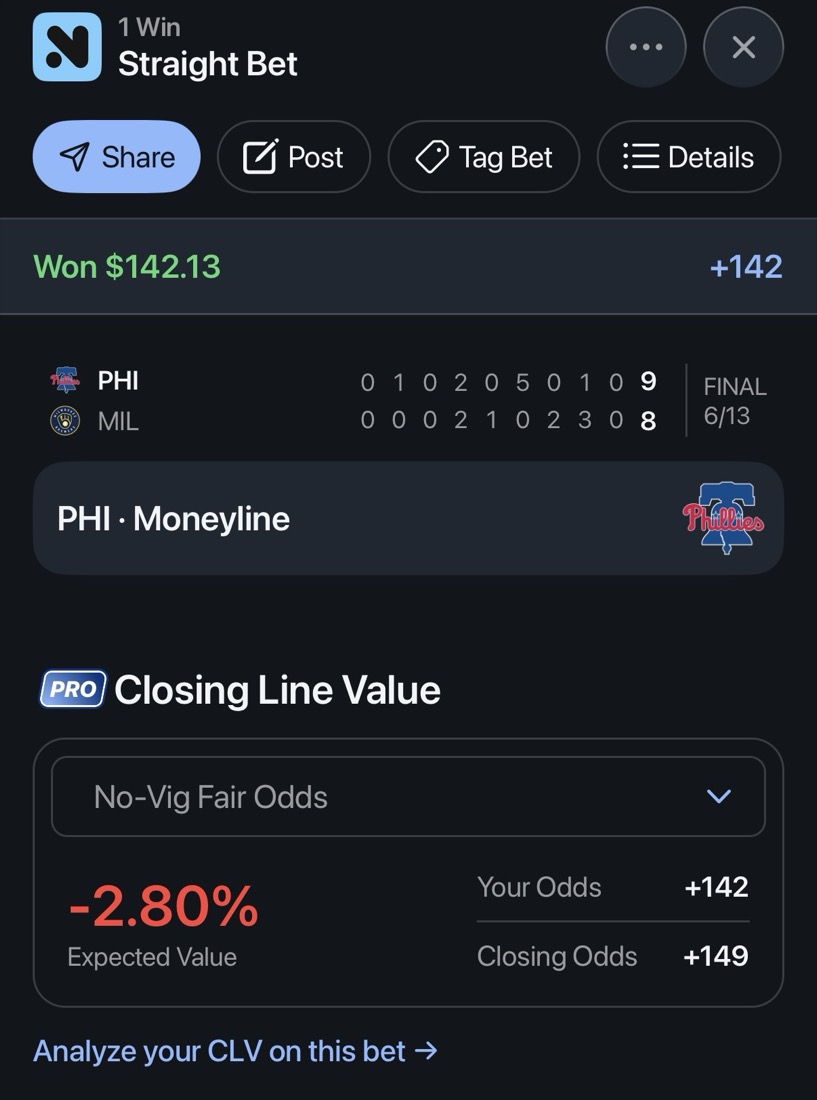
Here is a bet of mine that won $142. It felt great. It was still a bad bet.
I took it at +142. By the time the market closed, that same side was +149. The number moved away from me, which means the market decided my side was less likely than I had been given credit for at the moment I fired. Graded against the closing price, that bet was worth about -2.80 percent expected value. It won anyway. Results do that.
A loser that was priced right
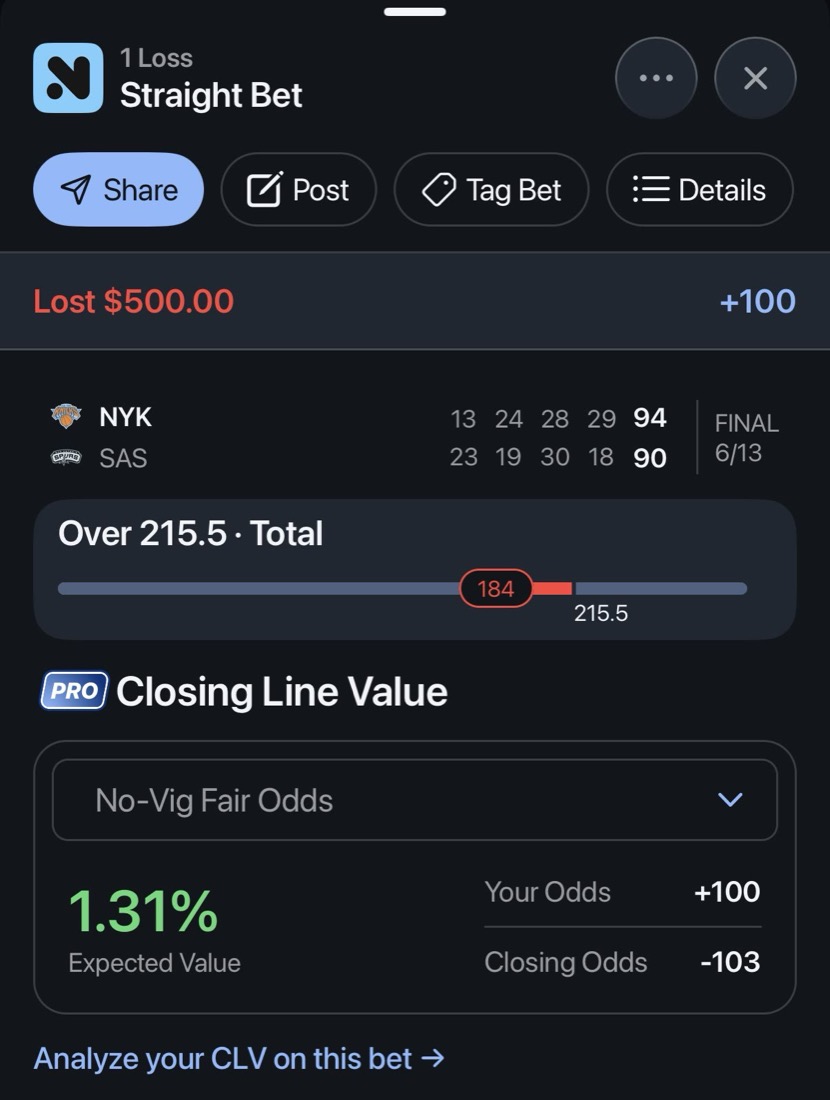
Now the other direction. This one lost $500, and it was a good bet.
I took a price the market subsequently moved toward. By the close, the number available was worse than what I had. Graded against the close, it was worth about +1.31 percent. I would take that bet again tomorrow at that price and I would expect to lose it plenty of times.
Why the closing price is the honest grader
The closing line is the last price a market offers before an event starts. By then every injury, every lineup scratch, every weather report and every dollar of sharp money has been absorbed into one number. It is the most informed estimate that market will ever produce about that game.
So if you consistently take prices better than the close, you are consistently buying something for less than the best available estimate of its worth. That is the definition of an edge, and unlike win rate it shows up in dozens of bets rather than thousands.
Three checks before you fire
Check the number against the market, not against your read. Strip the vig out of what several books are pricing and see what the consensus says the fair price is. The free no-vig calculator does it in seconds.
Check whether the price you are being offered beats that fair number. If it does, the size of the gap is your expected value. If it does not, there is no bet here regardless of how much you like the team.
Check it again at the close. Log the price you took and the price the market settled on. Do that for a month and you will know whether you are actually beating the market or just getting lucky in streaks.
What changes when you grade this way
You stop riding the emotional swing of the scoreboard, because a red day full of well-priced bets is a good day and a green day full of bad prices is a warning. You also get feedback fast enough to act on. Win rate needs thousands of bets to say anything. Closing line value says something after fifty.
The bet is decided when you place it. The game just tells you what happened afterwards.
Frequently asked questions
What is closing line value in sports betting?
Closing line value is the difference between the price you took and the price the market settled on right before the event started. If you took +142 and the market closed at +135, the line moved toward you and you beat the close. Consistently beating the close means you are buying outcomes for less than the market's best estimate of their worth.
Can a winning bet be a bad bet?
Yes. A bet taken at +142 that closed at +149 moved against the bettor, meaning the market concluded that side was less likely than the price paid implied. That bet graded at about minus 2.80 percent expected value. It still won, because a single result is mostly noise and tells you very little about whether the price was correct.
Why is closing line value better than win rate for judging a bettor?
Win rate needs thousands of bets before it separates skill from variance, because outcomes are noisy. Closing line value measures the quality of each decision at the moment it is made, so it produces a usable signal after dozens of bets rather than thousands. It is feedback you can act on inside a season.
How do I track closing line value?
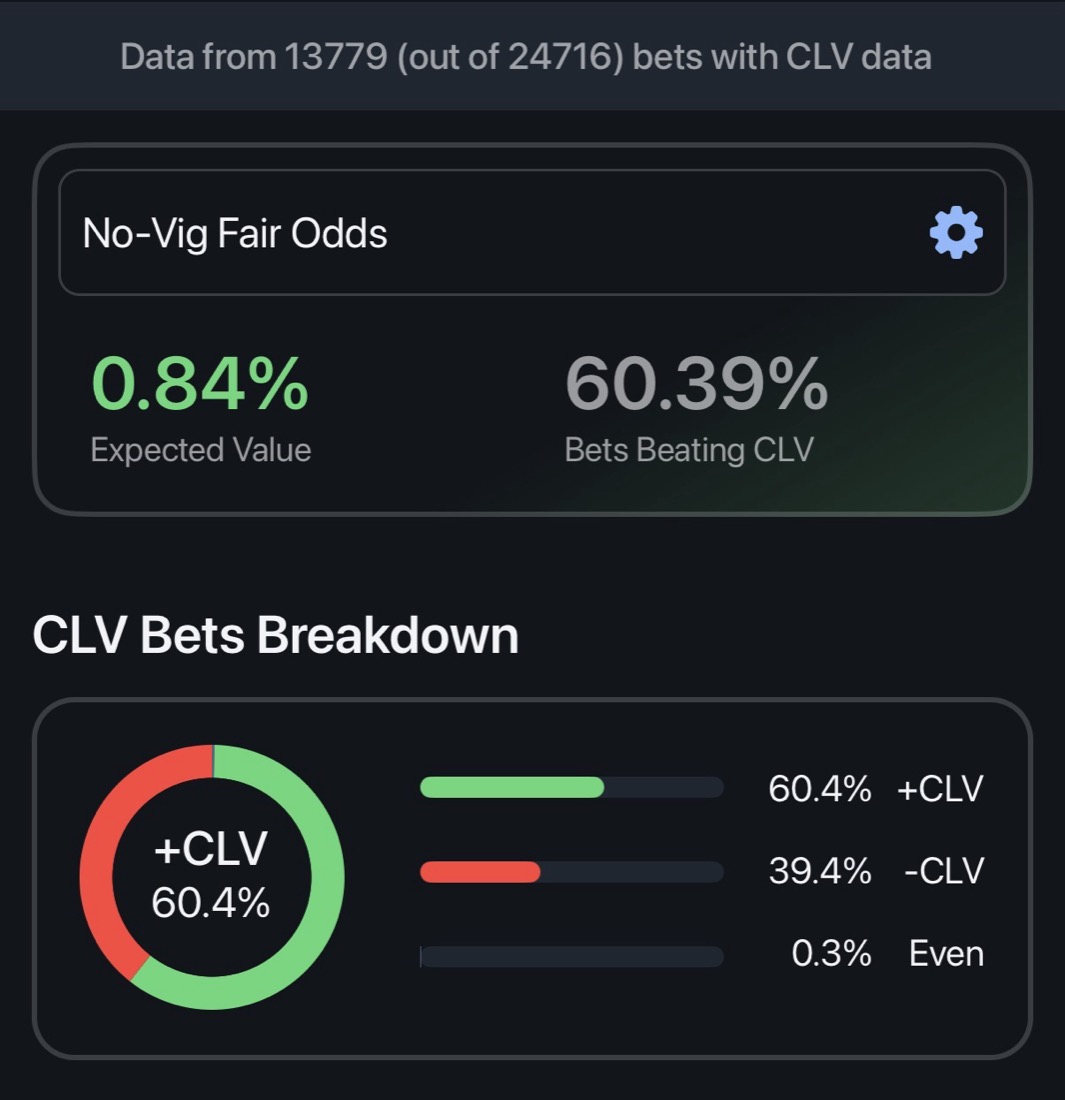
Record the price you took and the price the same market settled at just before kickoff, then compare them across all your bets. The share of bets where you beat the close is the headline number. In the record shown here, 60.4 percent of 13,779 tracked bets beat the closing line.