Original research · August 18, 2026
PrizePicks vs Underdog: What Each Pick Really Costs
By Matt Downs
Every pick em app charges you a price on every leg, even though none of them print it as a price. The payout table is the price. Once you convert it, the apps stop looking interchangeable.
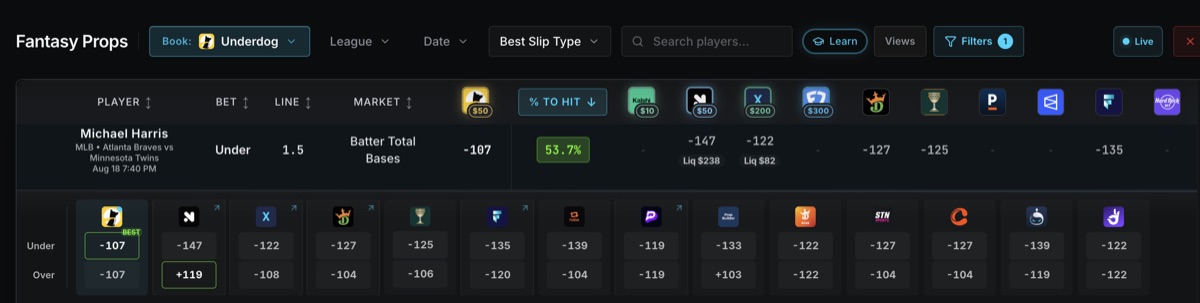
Here is that conversion run on one ordinary morning, 18 August 2026. PrizePicks prices every leg at -119, which demands 54.34 percent to break even. Underdog's four man flex pays 7.2x, and folded down to a per leg price by our props tool, the whole structure comes out to about -107, which demands 51.69 percent. That is a 2.65 point gap on every single leg, before you have picked a player.
What -119 and -107 actually demand
American odds are a break even percentage wearing a costume. At -119 you risk 119 to win 100, so you need to be right 119 out of every 219 attempts, which is 54.34 percent. At -107 the same arithmetic gives 51.69 percent.
Now use the row above. Michael Harris under 1.5 total bases. Pull the vig out of every book pricing that market and the consensus says the under hits about 53.7 percent of the time.
53.7 clears Underdog's 51.69 with two points of room. It fails PrizePicks' 54.34. Same player, same line, same side of the same market. The pick did not change. The price the app charges changed, and it moved the pick from playable to a pass.
On a single 100 dollar leg, that row at -107 is worth about 3.89 dollars of expected value. At -119 it is worth less than nothing.
The per leg gap, side by side
| PrizePicks per leg | -119 | 54.34% break-even |
|---|---|---|
| Underdog 4 man flex per leg | about -107 | 51.69% break-even |
| Gap per leg | 2.65 points | on every pick, before research |
| Sportsbooks on the Harris under | -122 to -147 | same market, same side |
| Devigged market probability | 53.7% | clears -107, fails -119 |
Where the -107 comes from, honestly
Four legs at a true -107 played as a straight parlay would multiply out to about 14x. Underdog's four man flex headline is 7.2x. Those two numbers only reconcile because the flex structure also pays a consolation when three of four legs hit, and the -107 figure is our props tool folding the whole payout table, top prize and consolation together, into one equivalent per leg price.
So treat -107 as the tool's conversion, not a number printed anywhere on Underdog. What you can verify yourself, on any market, in about a minute: the break even math on each price, and what the rest of the industry charges for the same line. Both checks are free.
What big money paid for the same number
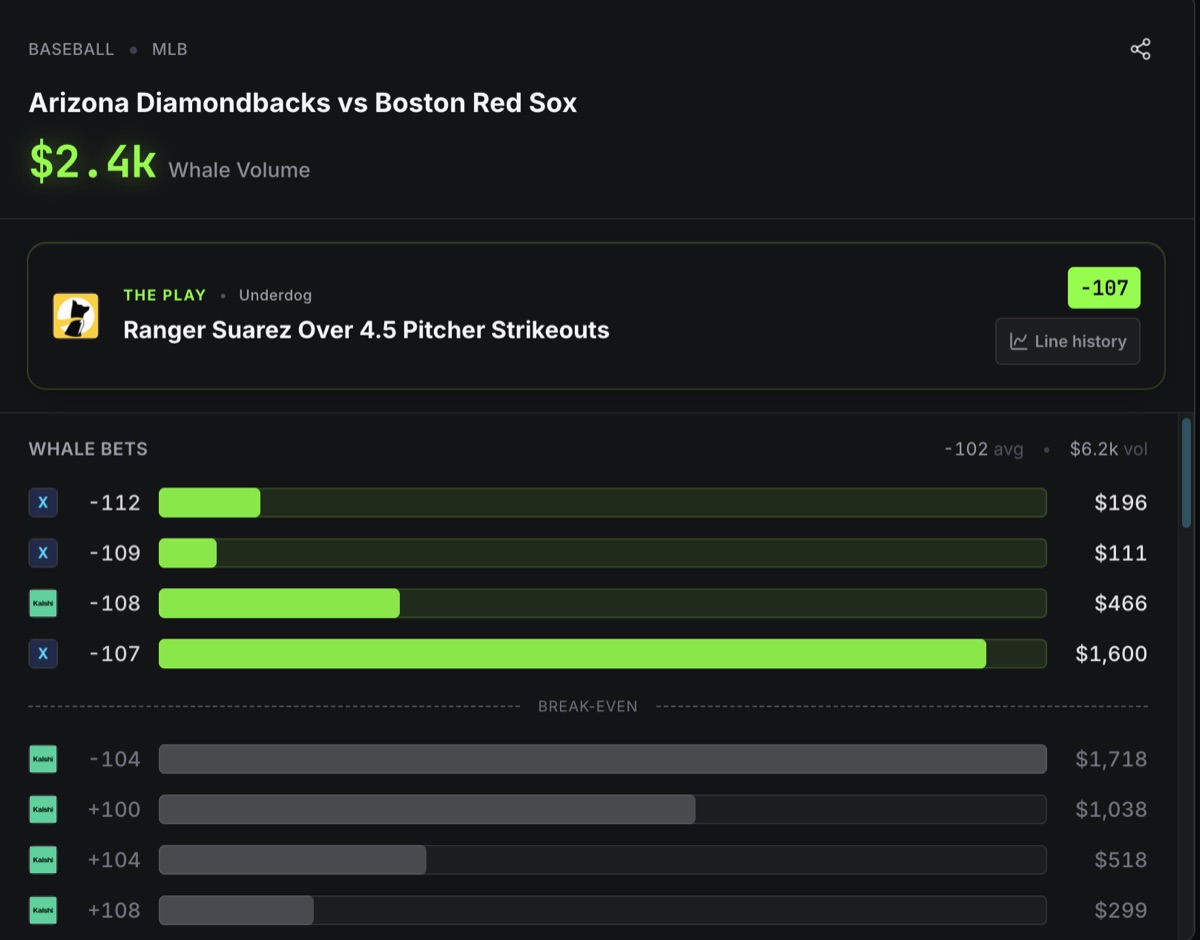
The same morning, the largest tracked bets on Ranger Suarez over 4.5 strikeouts came in at -107, -108, -109 and -112, which is 2,373 dollars of real money paying Underdog's price or worse for the identical position.
The market is never unanimous. Another 1,718 dollars sat at -104, a better price than Underdog offered. A serious read includes that side too. The lean, weighted by dollars, still says -107 was a fair or better price to pay, and a bettor with an exchange account and patience could have done slightly better.
None of this makes any leg a winner tonight. Every pick in the screenshots could lose without the math being wrong. The price was right when it was paid. That is the only part a bettor controls.
How to run this check yourself, free
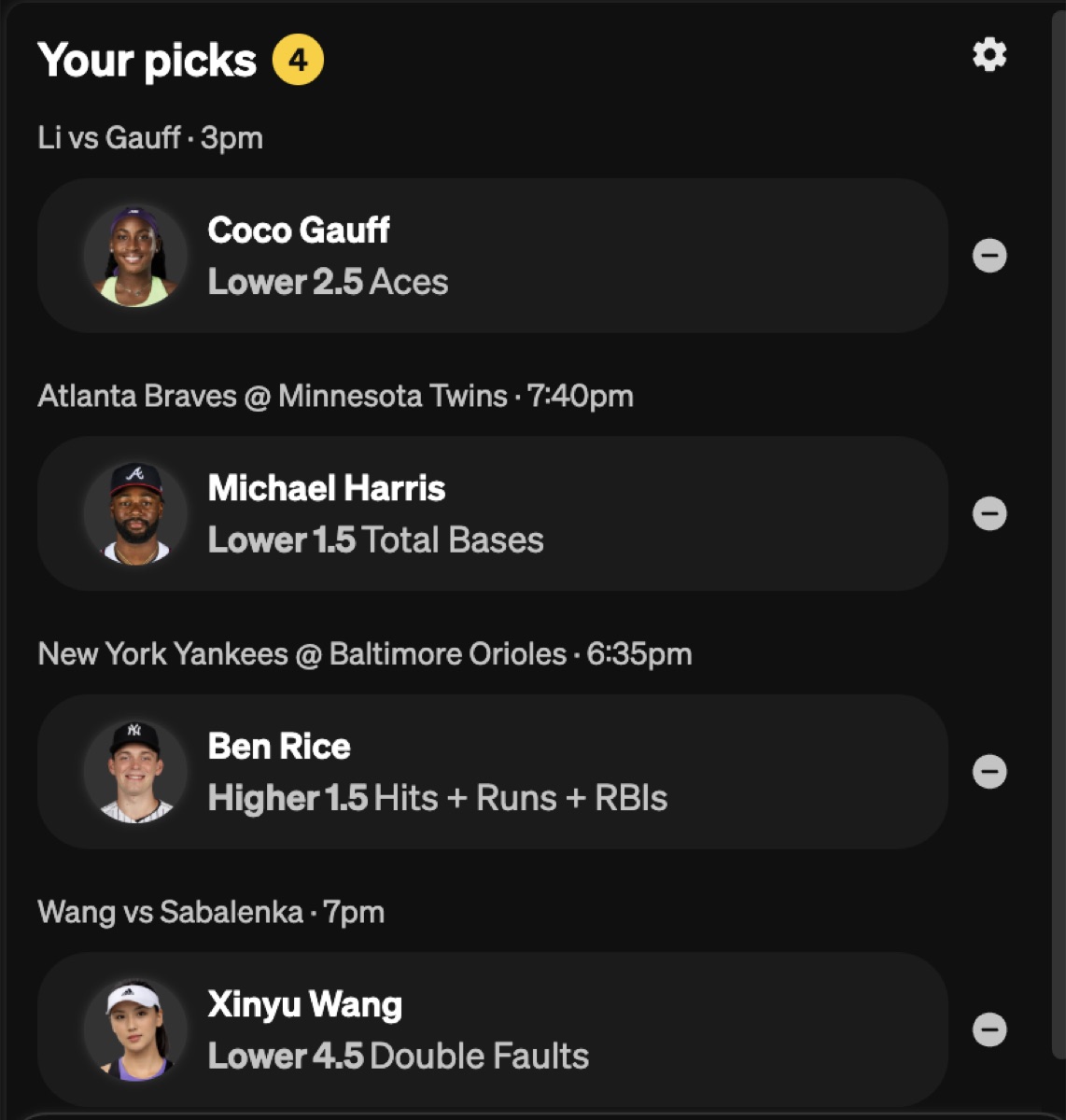
Take any prop you are about to play. Convert the app's price to a break even percentage with the free implied odds calculator, then look the same market up on a free odds screen that shows every book's price on both sides. The EV calculator turns the gap into dollars per hundred if you want the number made concrete.
If the devigged market number sits above your app's break even, the leg is playable. If it sits below, it is a pass no matter how good the player looks. On the morning measured here, that one check was the entire difference between the two biggest pick em apps in the country.
Frequently asked questions
Is Underdog better than PrizePicks?
On price per leg, as of this measurement, yes. Underdog's four man flex converts to about -107 per leg against PrizePicks' universal -119, which is 2.65 points of break even on every pick. Slates, boards and promos differ, so the honest answer is to run the break even check on the app you actually play.
What does -107 per leg mean on a flex entry?
It is the single price that reproduces the whole flex payout structure, the 7.2x top prize plus the three of four consolation, as if each leg were a straight bet. It needs 51.69 percent per leg to break even.
Why does the same prop have different prices on different apps?
Each app sets its own payout table and each sportsbook sets its own vig. On the market measured here the same under ran from -107 on Underdog to -147 at one sportsbook. The spread between venues is usually bigger than any edge you will find from research.
Does a winning slip prove the math was right?
No. Any single slip can win at a bad price or lose at a great one. The gradeable part is whether the price you paid demanded less than the market's honest probability at the time you paid it.