Should You Copy Kalshi Whales? What 59,320 Whale Bets Show
By Matt Downs · November 18, 2026
A Kalshi whale is someone putting thousands of dollars on a single game on Kalshi, the sports prediction exchange. Kalshi's public trade data shows every big order with its size, price and time, so the idea of copying them is everywhere: if someone is willing to put $50,000 on a team, they probably know something.
To find out whether that is true, Upside founder Matt Downs tracked 59,320 whale bets worth $336 million on Kalshi and priced each one against the rest of the market. The short answer: copying every whale on Kalshi loses about $3.40 on every $100, and the problem is the fee, not the whale. But a small slice of whale bets, about 1 in 20 on game lines, beat the closing line by 3.5%. This page explains how the test worked, why blind copying loses, and the three rules that separate the bets worth copying from the rest.
How to grade a copied bet: the closing line
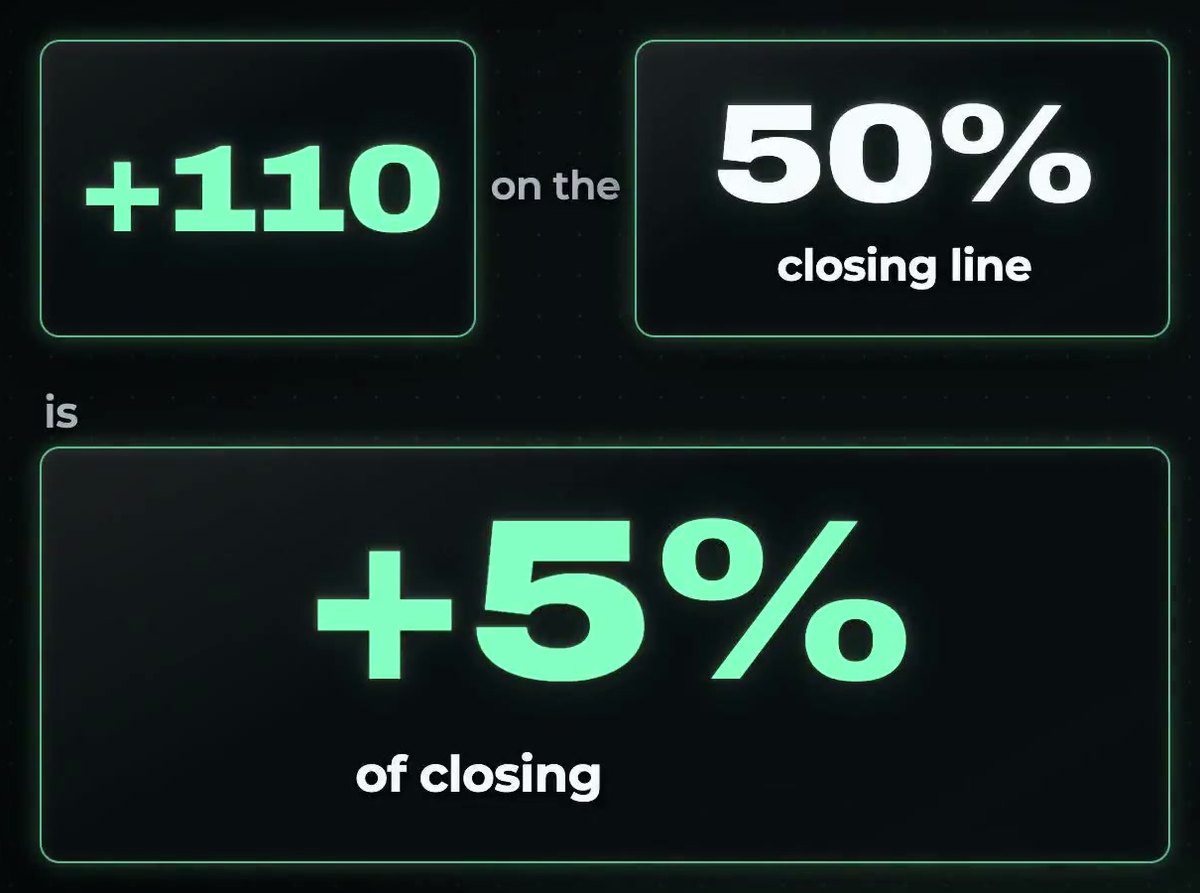
A few weeks of wins and losses is mostly luck, so the study grades every copied bet against the closing line instead of whether it won. Here is how that works. If a sportsbook has both sides of a game at -110, each side needs to win 52.4% of the time to break even, and the two sides add up to almost 105%. The extra 5% is the vig, the book's cut. Take the vig out and each side is really 50%, which is called the no vig price. The no vig calculator does this for any pair of odds.
The closing line is the last price before the game starts, and it is the most accurate price the game will ever have, because by then every sharp bettor and every big bet has hit the market. If you bet a team at +110 and it closes at 50% no vig, you beat the closing line by about 5%. You will not win every one of those bets, but a bettor who keeps beating the close comes out ahead over time. For more on why this is the number that matters, see closing line value explained.
Why copying every Kalshi whale loses money
Say you put $100 on every whale bet, on Kalshi, 60 seconds after the whale. On average you would lose $3.40 a bet, or -3.4%. Speed does not fix it: copying 10 seconds later was also -3.4%, and 5 minutes later was -3.5%, because Kalshi's price barely moves after a whale bets.
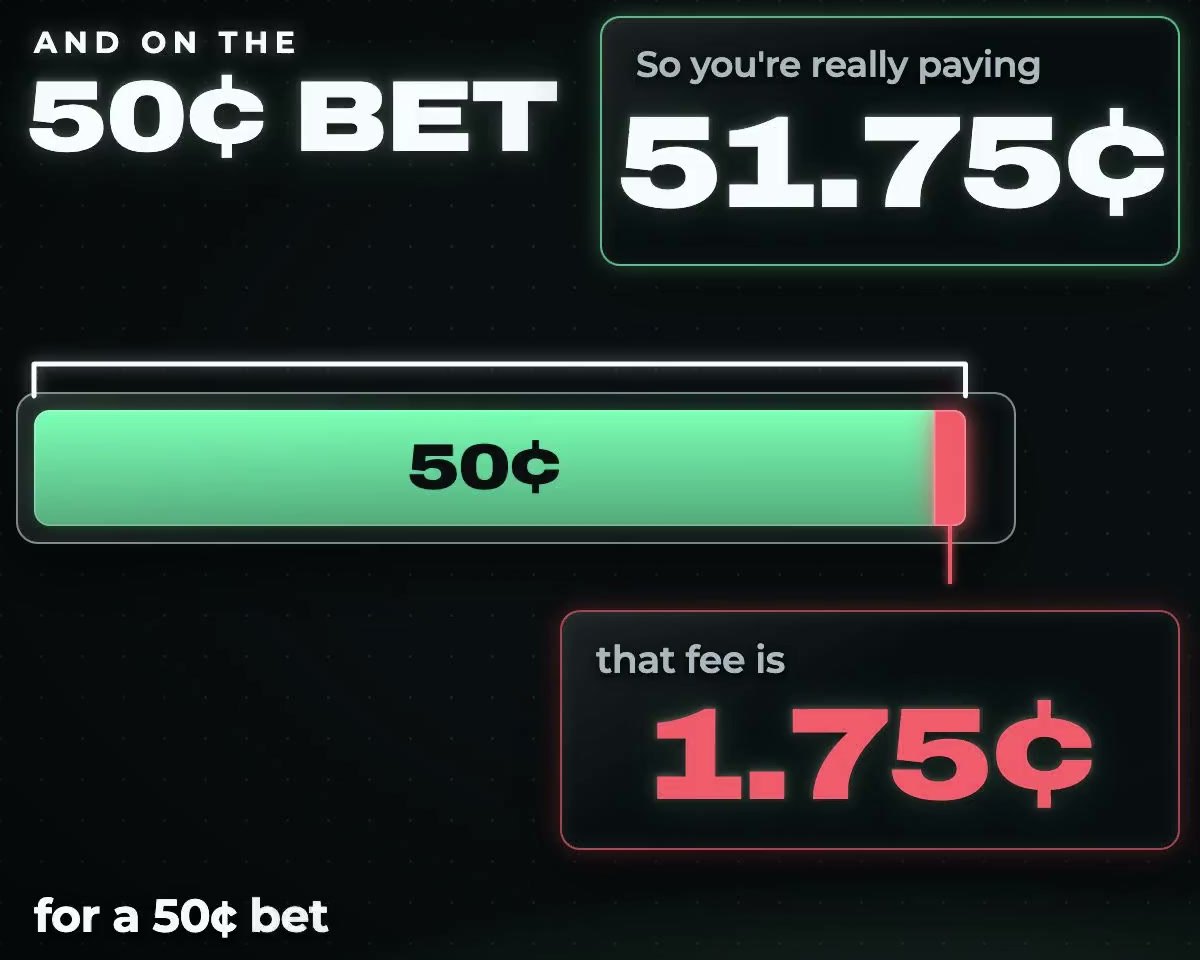
The money goes to the fee. A 50 cent contract on Kalshi really costs 51.75 cents once the trading fee is added, so about 3.5% of every dollar is gone before the game starts. The whales' own edge was worth roughly 0.7%. In other words, the fee is about five times bigger than the edge you are trying to copy, and you lose to the fee no matter how sharp the whale is. Kalshi's fees and the true cost per contract breaks the fee down further.
Rule 1: copy the bet at the best price, not on Kalshi
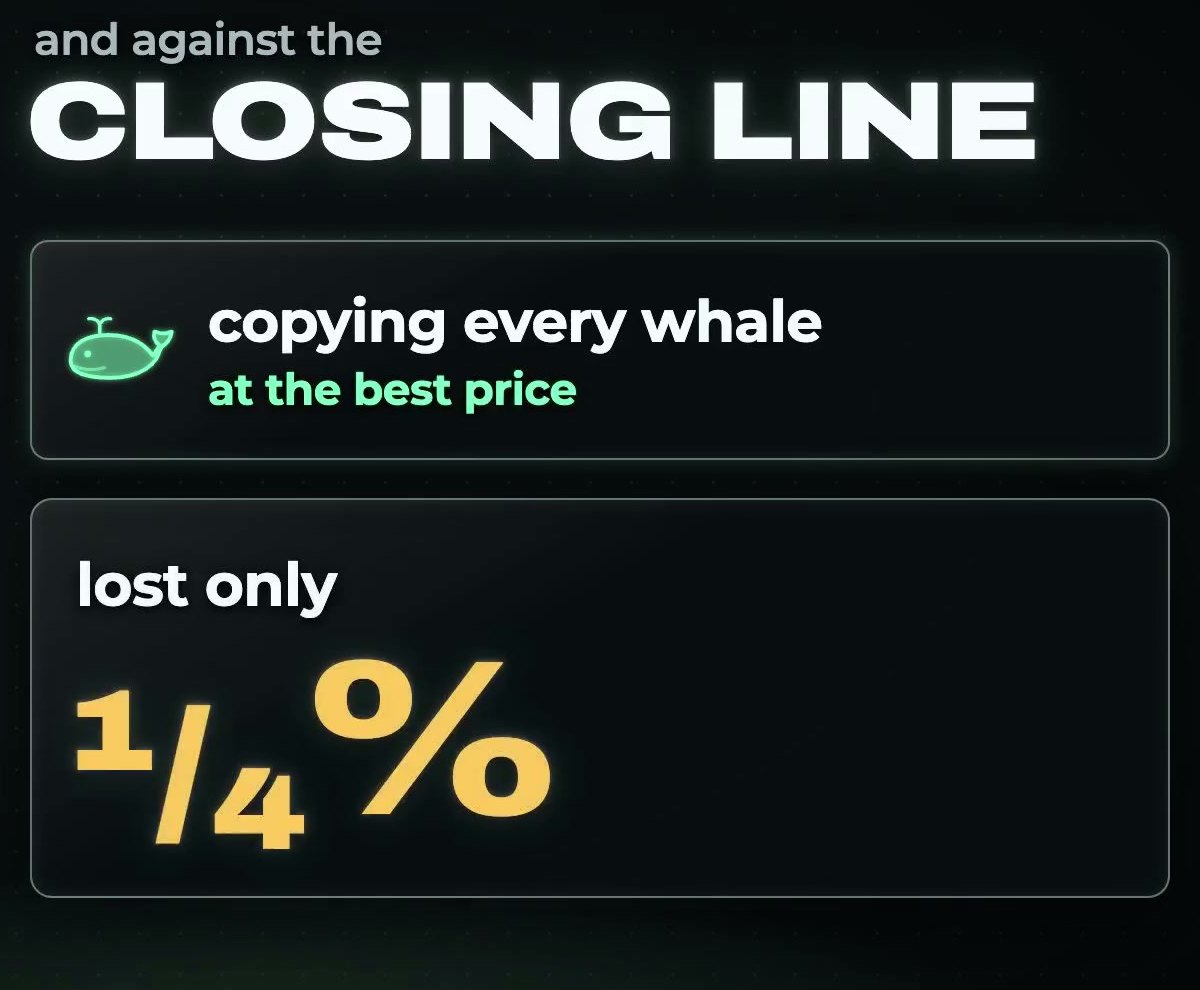
The next test took the exact same whale bets at the best price in the US, about 30 seconds after each whale, wherever that price was. On moneylines the best price beat Kalshi's more than 99% of the time, and copying every whale at the best price lost only about a quarter of a percent against the closing line, which is basically break even.
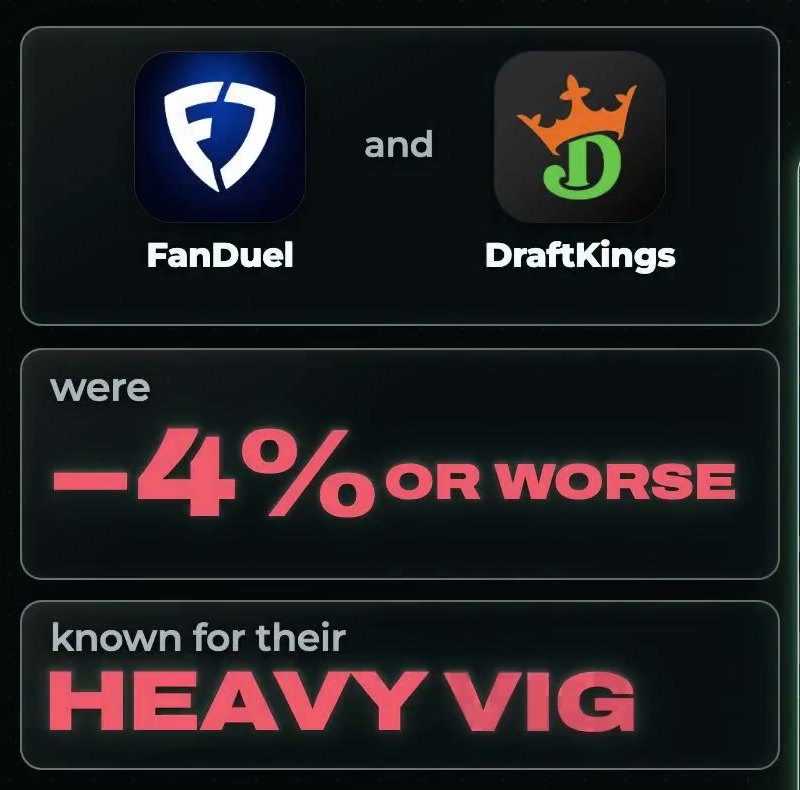
Where you place the bet changes everything. The best price was on Novig, a no-vig exchange, 58% of the time. The worst place to copy was a big sportsbook picked out of habit: FanDuel was -4.0%, BetMGM -4.4% and DraftKings -4.5% against the close. Same bets, same whales, and the only difference was the book. The free odds screen shows the best price for every game across 50 books, and why the same bet has different odds at different books explains why the gap exists.
Copying every whale bet, by where you place it (vs the closing line)
| On Kalshi, 60 seconds later | -3.4% | Kalshi's fee is bigger than the whale's edge |
|---|---|---|
| Best US price, 30 seconds later | about -0.25% | basically break even |
| FanDuel | -4.0% | |
| BetMGM | -4.4% | |
| DraftKings | -4.5% |
Rule 2: only copy when the price is +EV by 1% or more
Break even is not a profit, so the second step is checking whether the price is actually good. For every whale the study built a fair price: the no vig price from a group of books, with the sharper ones (Novig, Polymarket, Kalshi, ProphetX and Pinnacle) weighted a little heavier. If the best price available beats that fair price, the bet is +EV, meaning you are being paid more than the bet is really worth. How to devig odds to a fair price and building a fair price from book weights cover the method, and the EV calculator does the math for a single bet.
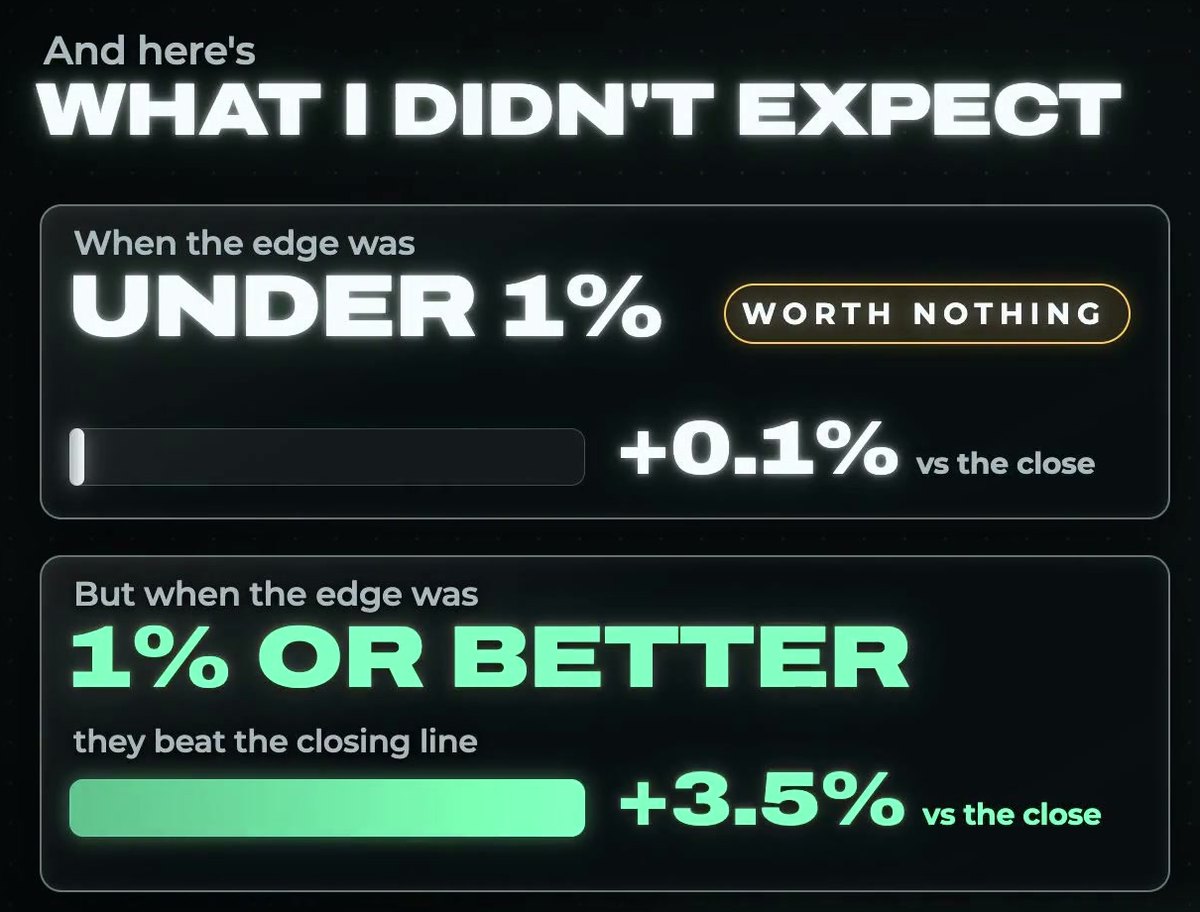
Then the study looked at the 7,242 whales of $5,000 or more on moneylines, spreads and totals. When the edge at the best price was under 1%, the copies beat the closing line by just 0.1%, which is worth nothing. When the edge was 1% or better, they beat the closing line by 3.5%. That was about 1 whale in 20, and the other 19 lost 0.4%. The whale tells you where to look. The price tells you whether it is a bet.
Game-line whales of $5,000+, by edge at the best price (vs the closing line)
| Edge of 1% or more (about 1 in 20 whales) | +3.5% | |
|---|---|---|
| Edge under 1% | +0.1% | worth nothing |
| Everything else (the other 19 in 20) | -0.4% |
Same whale money, two different bets
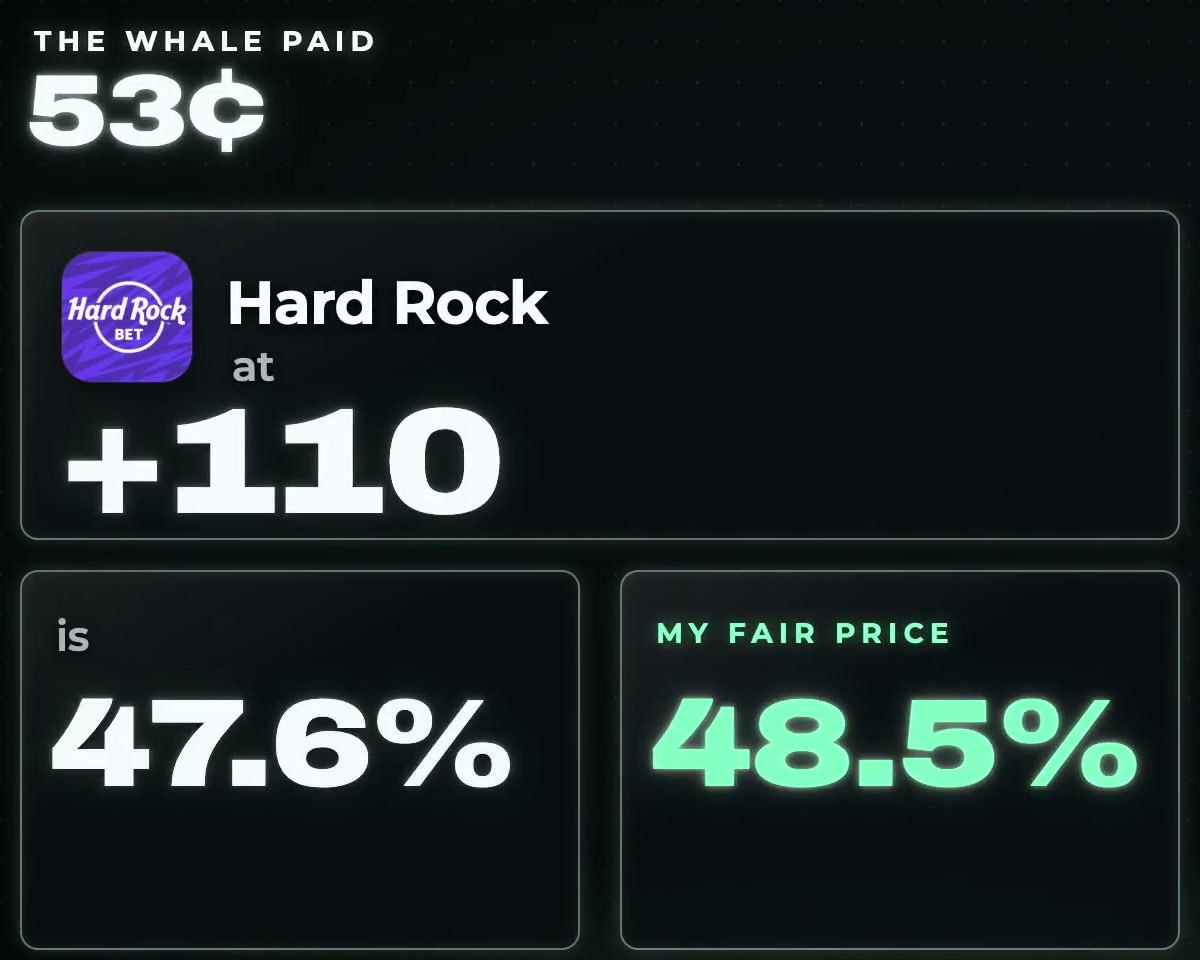
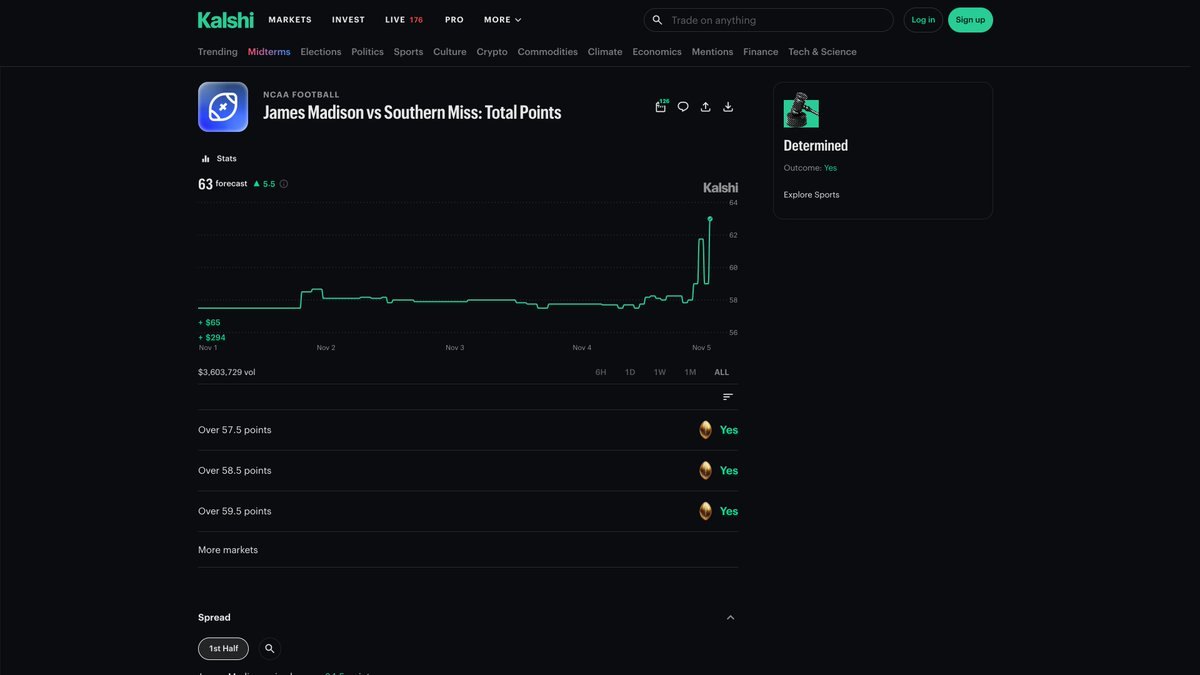
Two real games show the difference. On November 5, James Madison at Southern Miss, more than $305,000 in whale orders hit the over 58.5 on Kalshi at an average of 53 cents. While that money was coming in, Hard Rock was still paying +110 on the same over, which is 47.6%, and the fair price was 48.5%. That is +EV by 1.8%, so it is a copy. The market closed at 52% and the over hit.
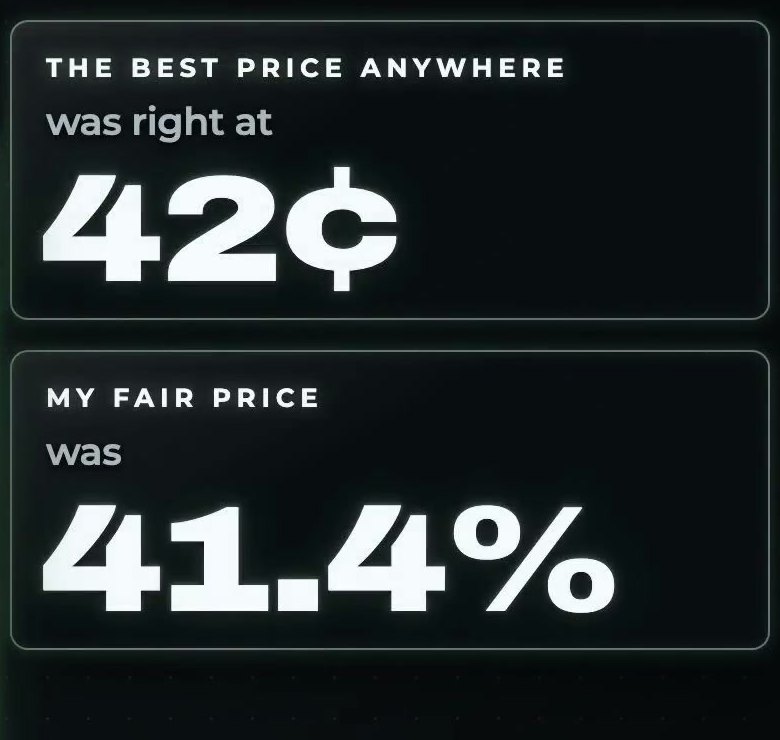
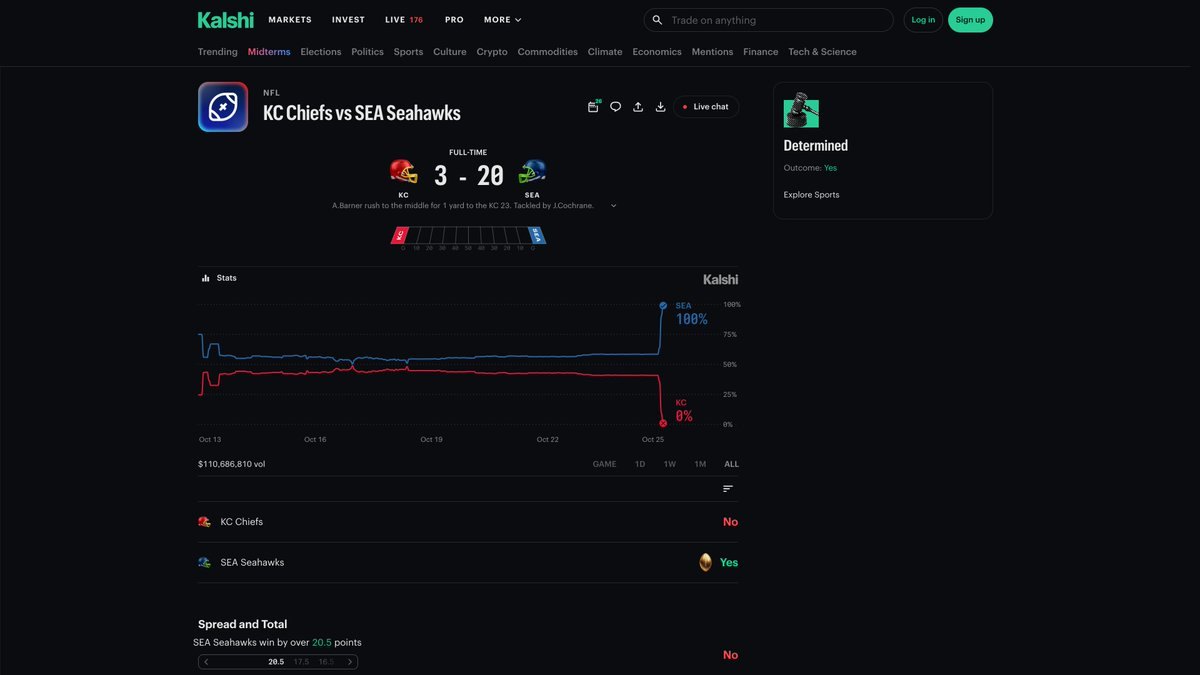
On October 25, Chiefs at Seahawks, almost $1.5 million went on Kansas City in the last hour before kickoff at 42 cents. The best price anywhere was 42 cents and the fair price was 41.4%, so there was no edge at all, and that one is a skip. The market closed at 40% and Kansas City lost 20 to 3. That was five times the whale money on the bet you skip, which is the whole point: the size of the whale does not make a bet good.
Player props are where copying whales works best
The study also priced 1,726 whale bets on player props. About 1 in 5 was +EV by 1% or more, and those beat the closing line by 4.4%, while the rest lost about a quarter of a percent. That is a bigger share and a bigger edge than on game lines, because prop markets are thinner and slower to adjust.
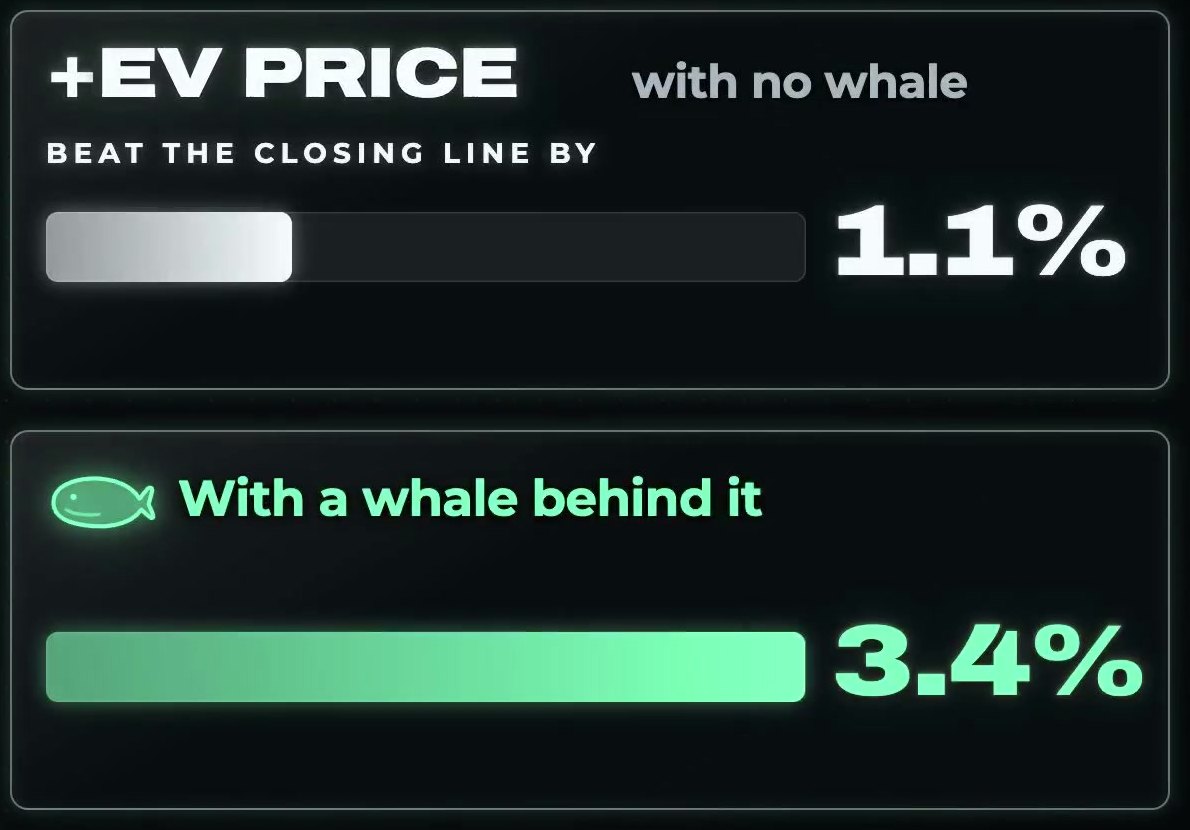
On props the whale also adds something on top of the price. With the same players and the same lines, a +EV price with no whale behind it beat the close by 1.1%, and a +EV price with a whale behind it beat the close by 3.4%. Following sharp money on player props covers the same idea from the sportsbook side.
Two more tells: timing and market share
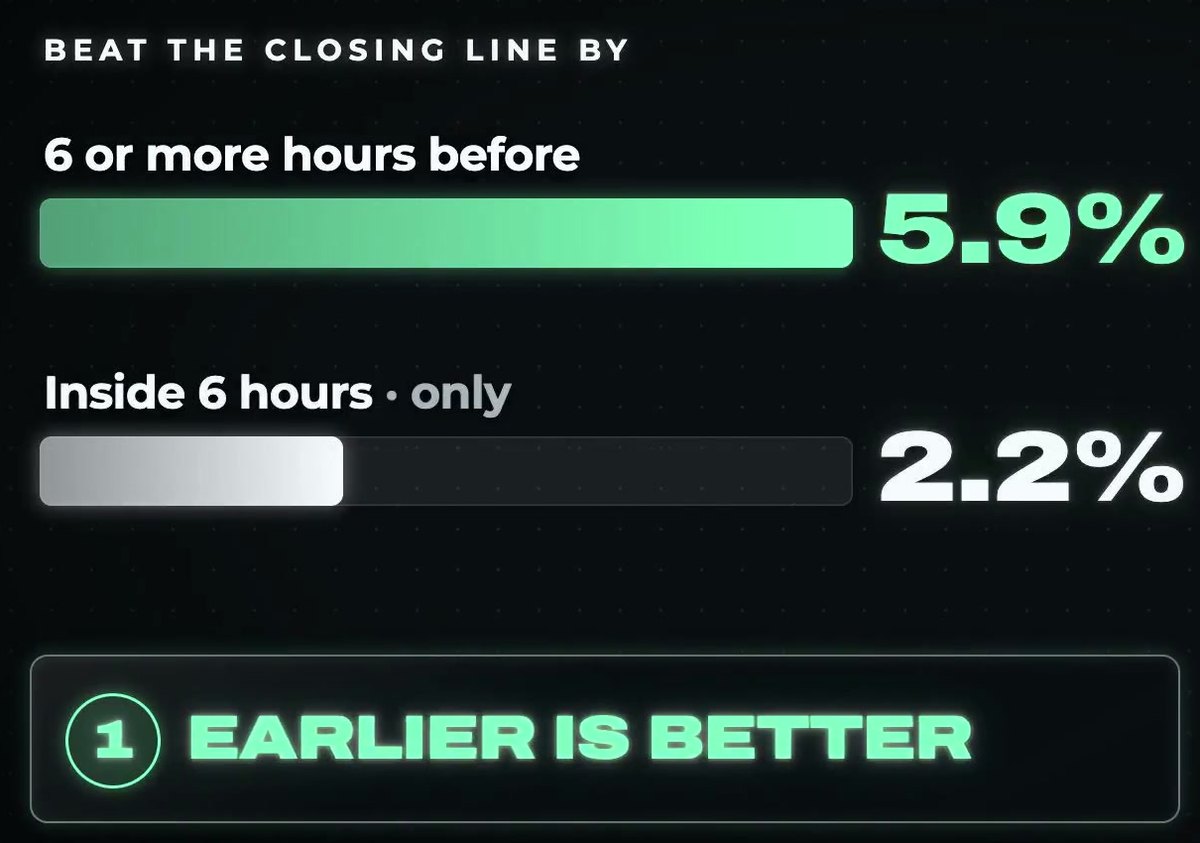
Earlier is better. A whale that was +EV by 1% and came 6 or more hours before the game beat the close by 5.9%, compared to 2.2% for one inside 6 hours. Early prices have more room to move, and the whale is often first to the number.
The size of the market matters more than the size of the whale. In the biggest markets, think a prime time NFL moneyline, the price did not move toward the whales at all. But when the whale was a fifth or more of all the money in that market, the price moved their way twice as often as it moved against them. A $20,000 whale in a small college market can say more than a $200,000 whale on Sunday Night Football. How liquidity affects Kalshi edges goes deeper on market size.
How to find whales worth copying in 30 seconds
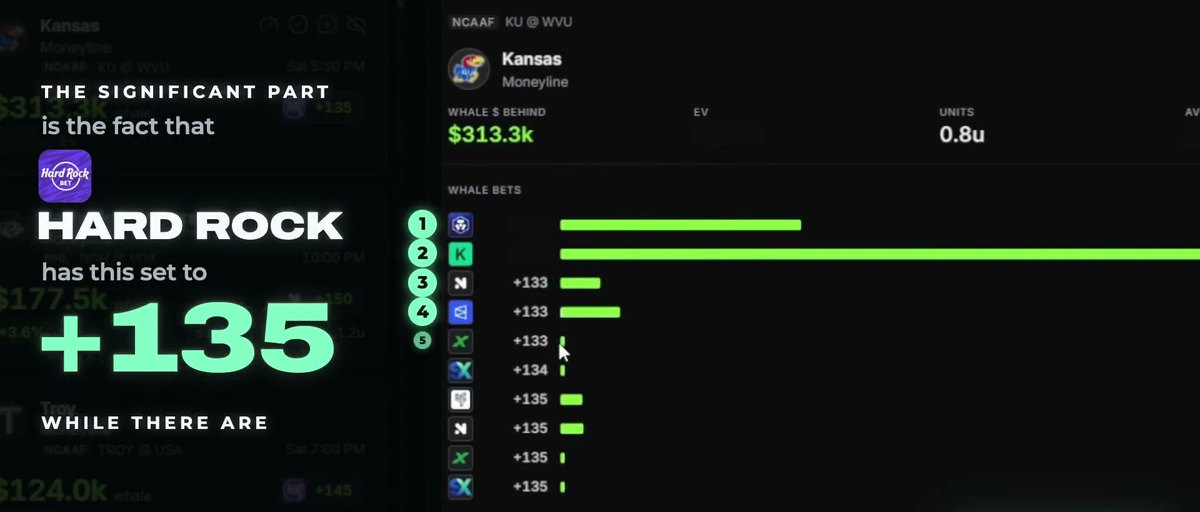
Doing this by hand is close to impossible, because you would need the no vig price from a dozen books, weighted and compared, before the price moves. Whale Watch on Upside does it live, and it comes down to two checks. First, the whale money should be sitting at a worse price than your book is offering. In one live example there was $313,000 of whale money on the Kansas moneyline while Hard Rock was still offering +135.
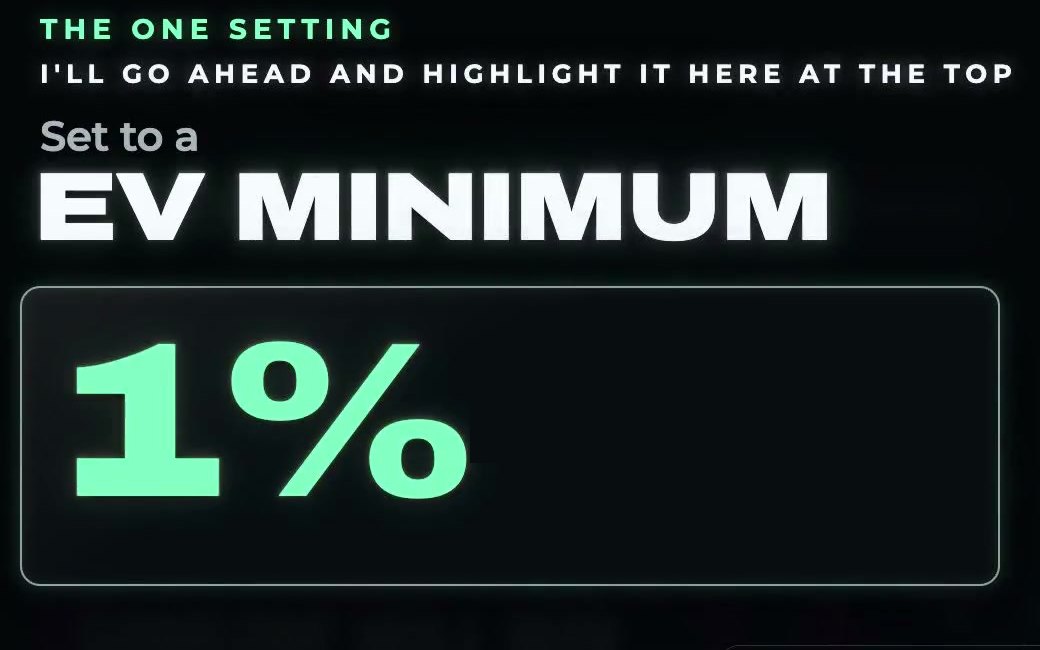
Second, set Min EV to 1%, so the only plays left are ones where your book's price also beats the fair odds. On that Kansas bet the fair odds were +132 against Hard Rock's +135, so both checks passed. Everything else on the board is a whale you can ignore, no matter how big it is.
The checklist for copying a Kalshi whale
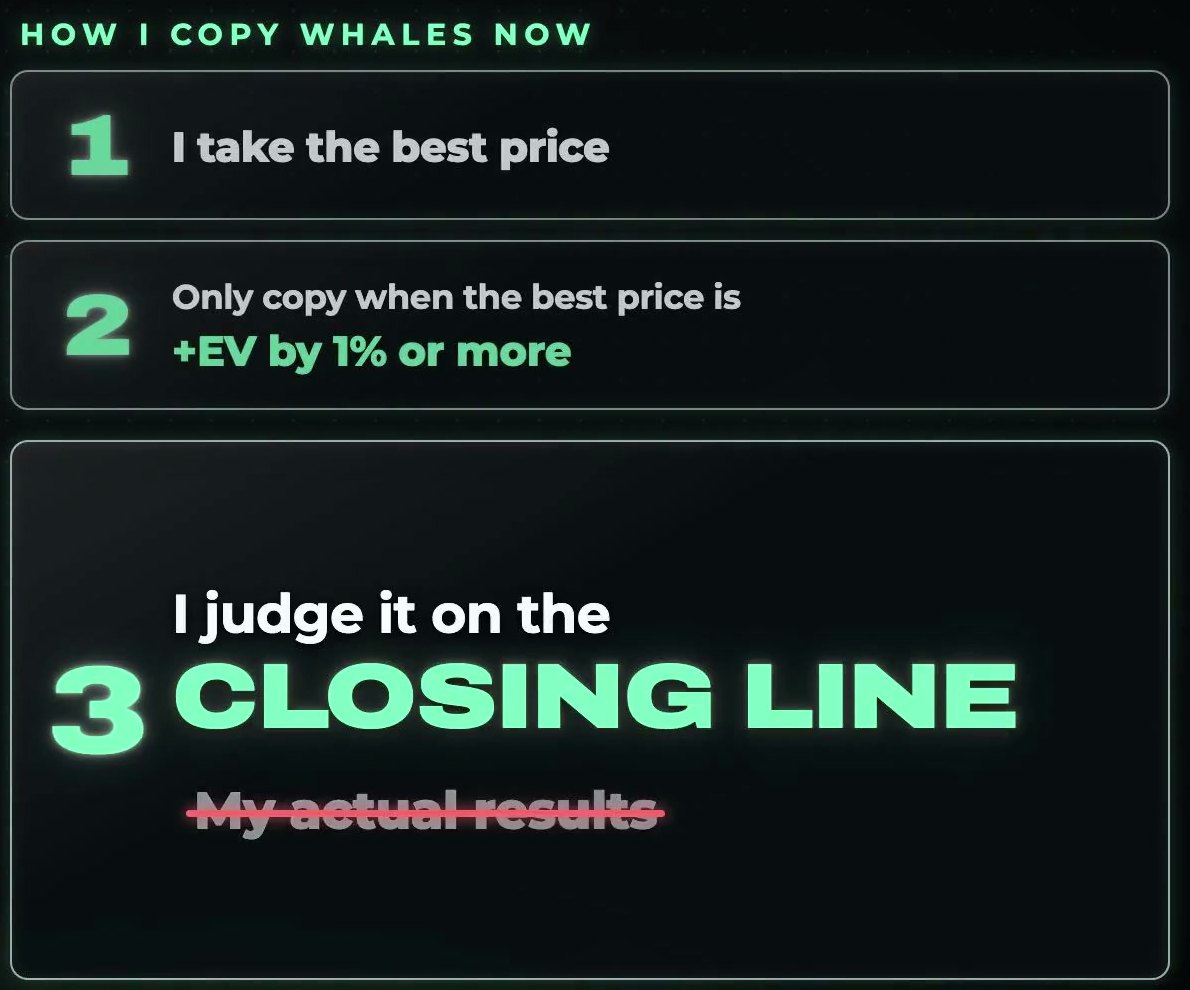
1. See a whale? Check the price before anything else, because the whale alone is not a reason to bet.
2. Take the best price available, wherever it is. Copying on Kalshi or at a heavy-vig book gives the edge back to the fee.
3. Only copy when that price is +EV by 1% or more against a fair, no vig price.
4. Favor player props and early whales, where the edge was largest in the study.
5. Move fast, because good prices disappear in seconds once the market reacts.
6. Grade yourself on the closing line, not on a few weeks of wins and losses. How many bets it takes before results mean anything shows why.
Frequently asked questions
Should you copy Kalshi whales?
Not blindly. Copying every whale bet on Kalshi 60 seconds later lost about 3.4% a bet in a study of 59,320 whale bets, because Kalshi's fee is bigger than the whales' edge. Copying at the best price and only when the price is +EV by 1% or more turned that into a 3.5% edge against the closing line on game lines.
Why does copying whale bets on Kalshi lose money?
The fee. A 50 cent contract costs 51.75 cents with the fee, about 3.5% of the stake, while the whales' average edge was about 0.7%. Speed does not help, because Kalshi's price barely moves after a whale bets.
Can you see who the whales are on Kalshi?
Not from the trade data. Kalshi's public trades show the size, price and time of each order, but not the account behind it. Some traders share their history on Kalshi's leaderboard, but most of the top sports traders keep their trades hidden.
Where is the best place to copy a whale bet?
Wherever the best price is at that moment. In the study the best price was on Novig 58% of the time, and copying at the best price was roughly break even against the close, while FanDuel, BetMGM and DraftKings each lost 4% or more.
How do I know if a whale bet is +EV?
Compare the best available price to a fair, no vig price built from several books, with sharper books weighted more heavily. If the best price beats the fair price by 1% or more, it is worth copying. Upside's Whale Watch shows this live with a Min EV filter.
Are whale bets on player props better than game lines?
Yes, in this study. About 1 in 5 prop whales was +EV by 1% or more, and those beat the closing line by 4.4%, compared to about 1 in 20 on game lines. On props, a whale behind a +EV price also roughly tripled the edge compared to the same +EV price with no whale.