Steam Chasing in Sports Betting: What It Is and Why It Works
By Matt Downs · November 18, 2026
Steam is what bettors call a fast, sharp move in a betting line. When sharp money hits a game, the sharpest books move their price first, and a lot of slower sportsbooks and apps keep dealing the old price for a few minutes after that. Steam chasing means betting that old price before the slow book catches up.
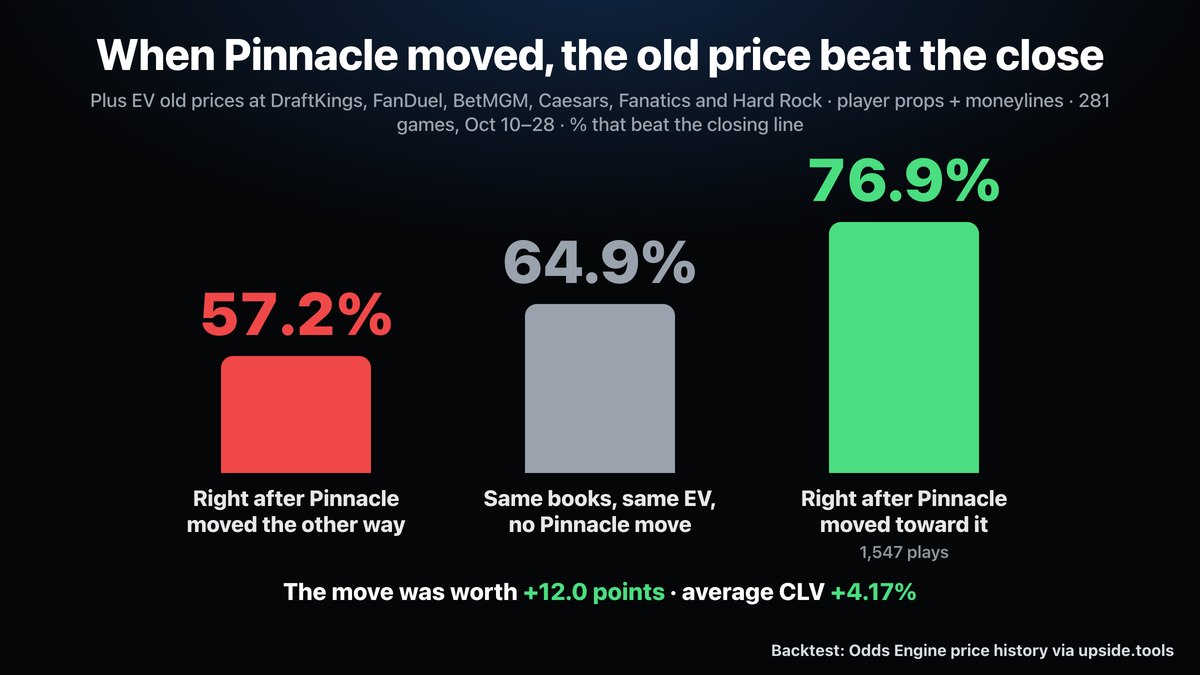
It sounds like a trick, so Upside tested it before building a tool around it. Across 281 games from October 10 to October 28, 2026, when Pinnacle moved toward a bet and a big US sportsbook was still sitting on a +EV old price, that old price beat the closing line 76.9% of the time over 1,547 plays. The same kind of bet with no Pinnacle move beat it 64.9% of the time. This page explains what steam is, what the backtest showed, which books are worth following, how long the old price lasts, and how to set up Upside's Steam Chaser, which is free during early access.
What is steam in sports betting?
Every sportsbook prices the same games, but they do not all react at the same speed. The sharpest books, the ones that take big bets from professional bettors, move their lines within seconds of sharp money coming in. Slower books often keep the old line up for minutes, sometimes longer. That gap is the opportunity: for a short window, the slow book is offering a price the rest of the market has already decided is wrong. Why betting odds change during the day covers the reasons lines move in the first place.
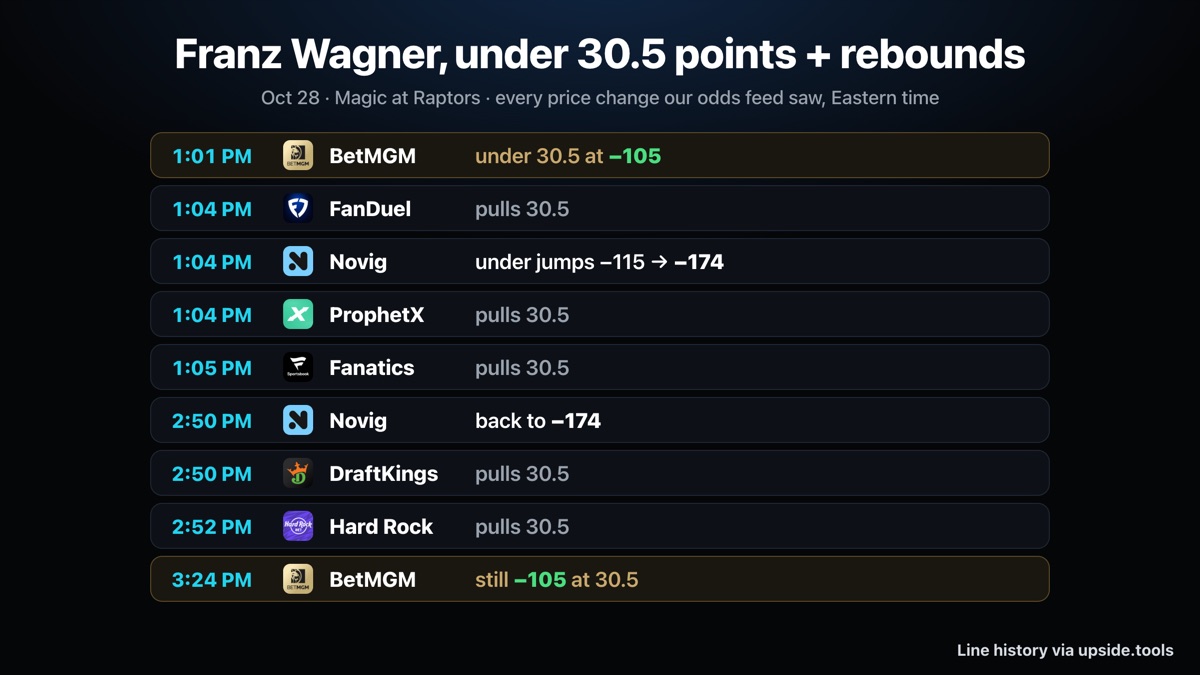
Here is what steam looked like on a real prop. On October 28 at 1:04 PM, FanDuel, Fanatics and ProphetX all pulled Franz Wagner's points plus rebounds line at 30.5 within about a minute of each other, and Novig's under jumped from -115 to -174. DraftKings and Hard Rock pulled it by 2:52. BetMGM was still dealing the under 30.5 at -105 at 3:24, more than two hours after the first move. That BetMGM price was the steam chase.
Does steam chasing work? The backtest
To find out, every price change from October 10 to October 28 was replayed across 281 games, on player props and moneylines. The test took +EV old prices at six big US sportsbooks (DraftKings, FanDuel, BetMGM, Caesars, Fanatics and Hard Rock) and graded each one against the closing line, the last price before the game starts, which is the best early sign that a bet had an edge. Closing line value explained covers why the close is the yardstick.
Right after Pinnacle moved toward the bet, the old price beat the close 76.9% of the time over 1,547 plays. The same kind of bet at the same books and the same EV, with no Pinnacle move, beat it 64.9% of the time. When Pinnacle moved the other way, it dropped to 57.2%. The move by itself was worth about 12 points. It also held for small edges: after a Pinnacle move, even plays showing under 1% EV beat the close 71.0% of the time, because the EV number had not caught up to the move yet.
How often a +EV old price beat the closing line (Oct 10-28, 281 games)
| Right after Pinnacle moved toward the bet | 76.9% | 1,547 plays |
|---|---|---|
| Same books and EV, no Pinnacle move | 64.9% | |
| Right after Pinnacle moved the other way | 57.2% | |
| After a Pinnacle move, plays under 1% EV | 71.0% |
Which books to follow for steam
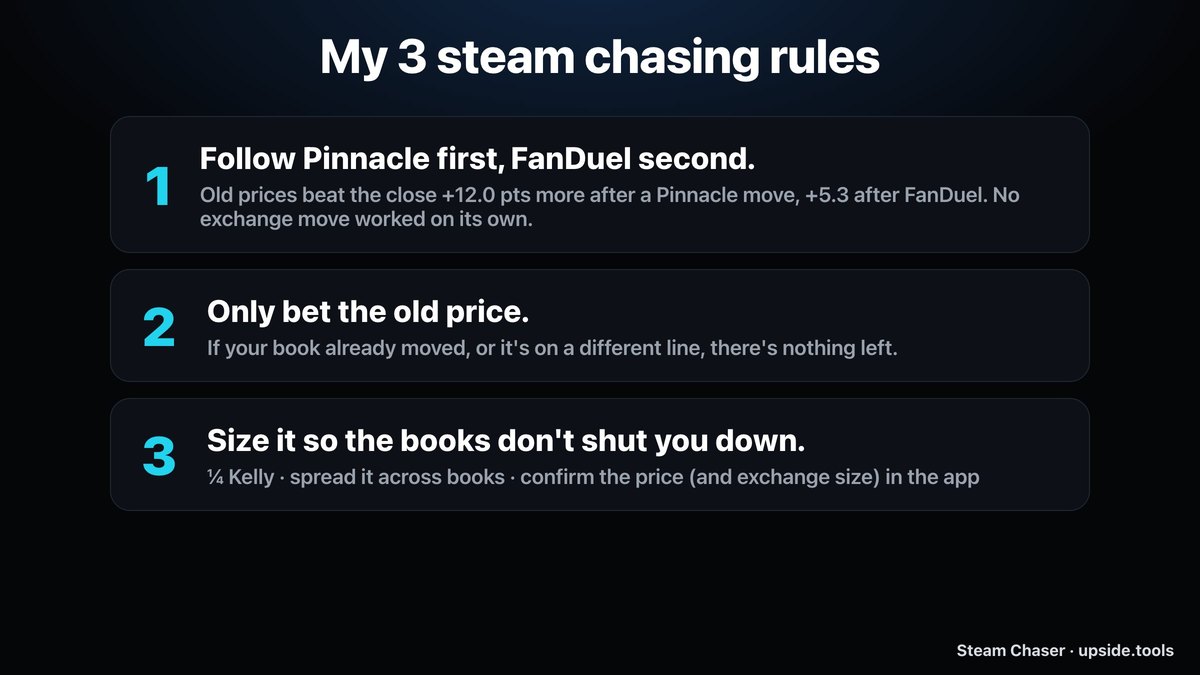
Not every move is steam. In the test, Pinnacle was the reference book whose moves paid, and FanDuel was second. Pinnacle's moves paid at DraftKings, BetMGM, ProphetX and Novig, and FanDuel's paid at DraftKings and BetMGM.
Exchanges are a different story. When Novig, Kalshi or ProphetX moved on their own, the old prices did no better than a normal +EV bet, even when two or three of them agreed. Exchange prices change every few seconds as orders come and go, so a single move often means nothing. Exchange moves only helped when Pinnacle had moved too. Following the exchanges gives you a lot more plays, but not better ones.
How long the old price lasts
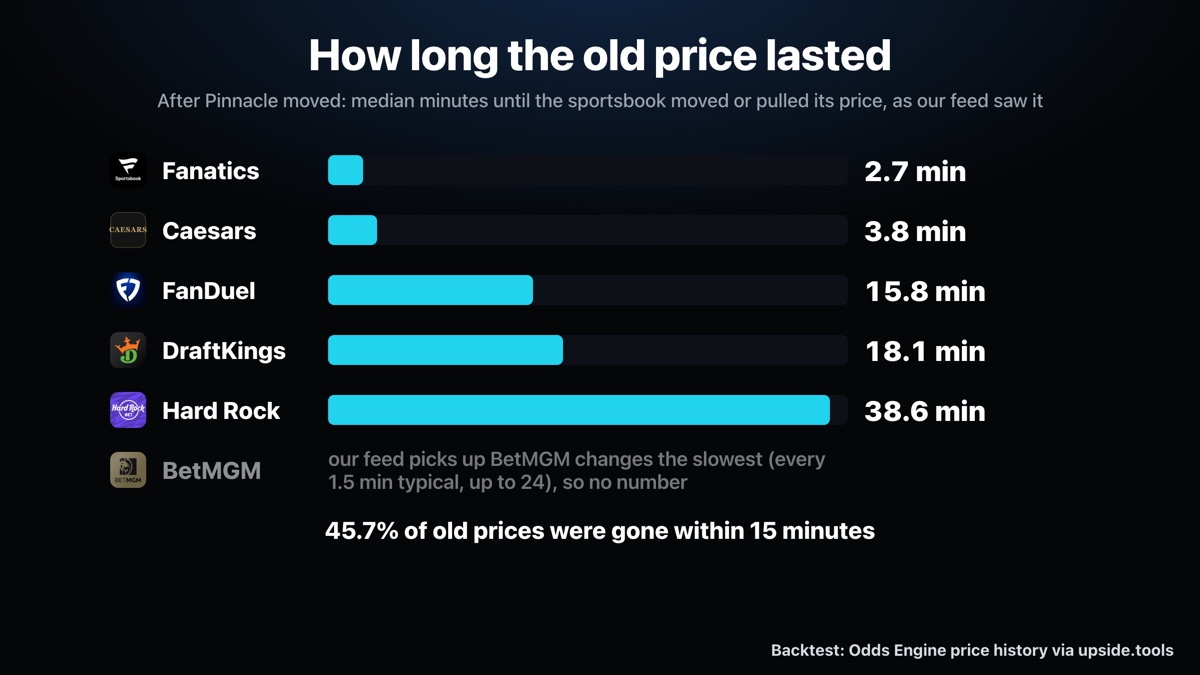
Speed matters. After Pinnacle moved, the median time until each sportsbook moved or pulled its old price was 2.7 minutes at Fanatics, 3.8 at Caesars, 15.8 at FanDuel, 18.1 at DraftKings and 38.6 at Hard Rock. Overall, 45.7% of the old prices were gone within 15 minutes. If you see a steam play, take it or let it go, because waiting usually means the price is gone.
Three rules for chasing steam
1. Follow Pinnacle first and FanDuel second. Those are the books whose moves mean something. An exchange moving by itself is mostly noise.
2. Only bet the old price. If your book has already moved, or it is showing a different line, there is nothing left to take. Let it go and wait for the next one.
3. Keep the size small. Sportsbooks know what steam chasing looks like. Betting a quarter Kelly and spreading it across the books you have keeps accounts open a lot longer. The Kelly calculator and bet sizing with the Kelly criterion explain the sizing.
Real steam plays
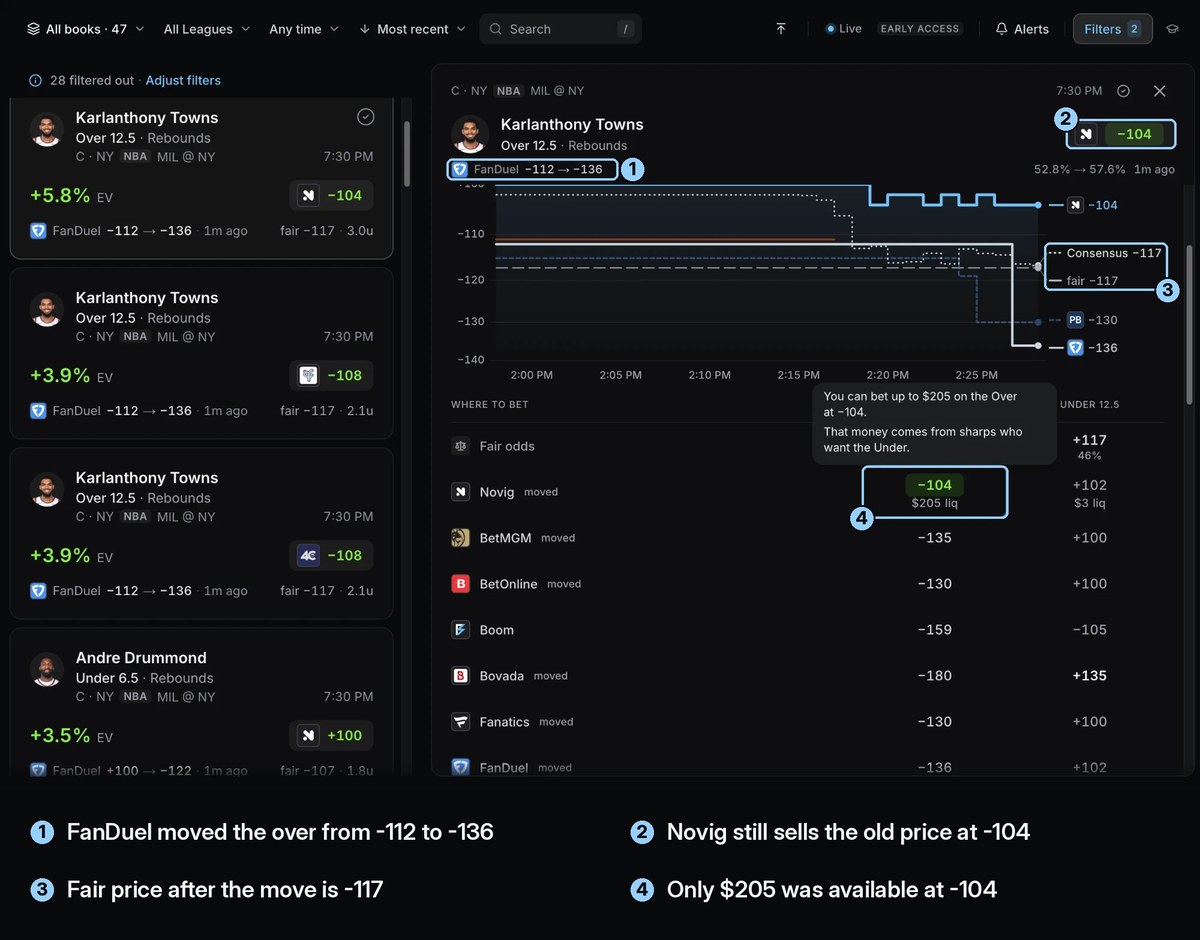
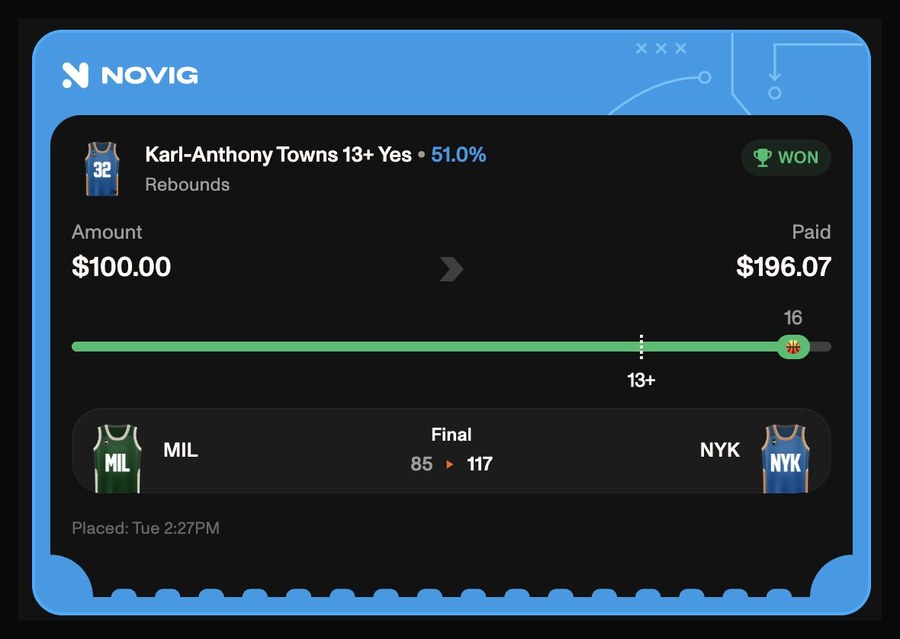
Karl-Anthony Towns over 12.5 rebounds. FanDuel moved the over from -112 to -136, and the fair price after the move was -117, but Novig was still selling the old price at -104, with only $205 available at that number. Upside founder Matt Downs put $100 on it. Towns had 16 rebounds, and the bet paid $196.07.
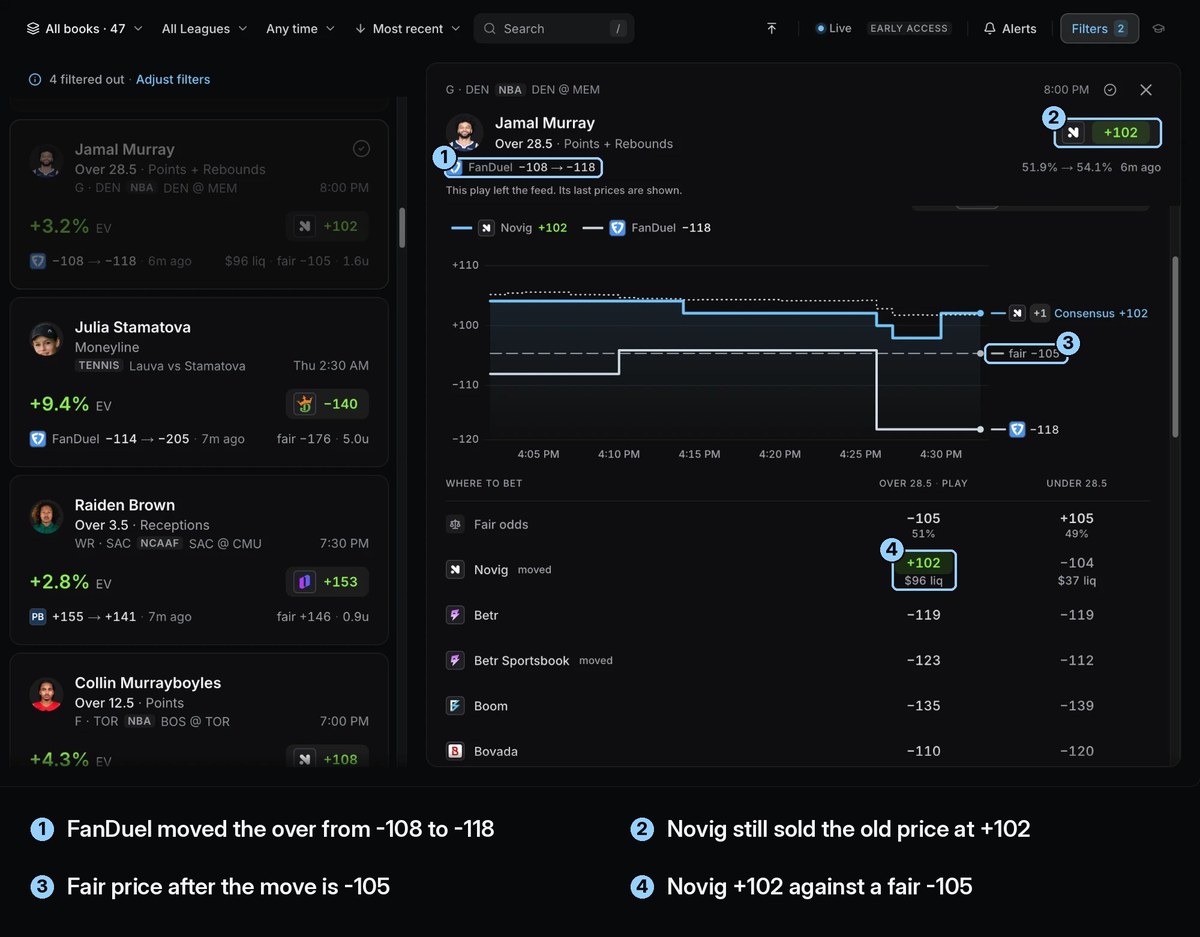
Jamal Murray over 28.5 points plus rebounds. FanDuel moved the over from -108 to -118, the fair price was -105, and Novig still had the old price at +102. Murray finished with 34.
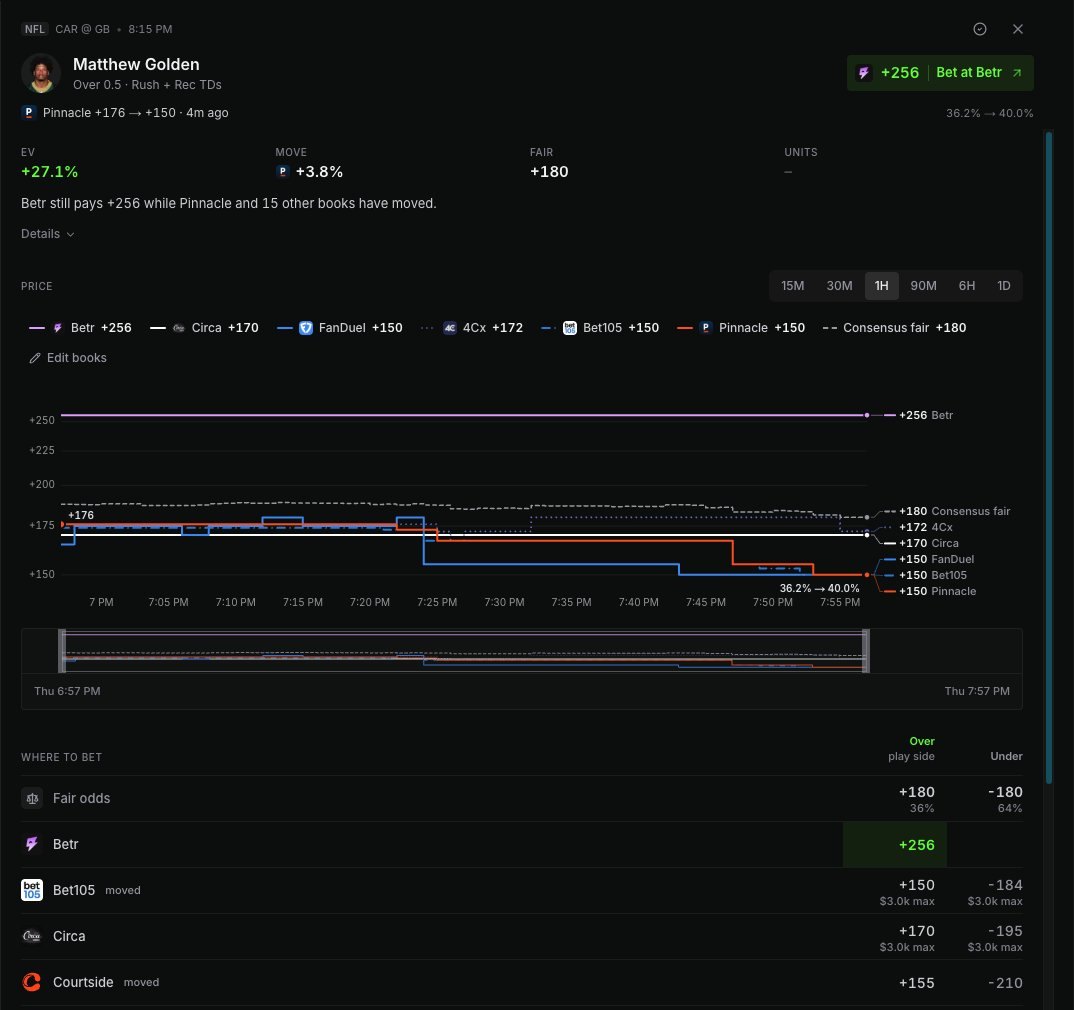
Matthew Golden to score a touchdown. On Thursday Night Football, Pinnacle moved Golden's touchdown from +176 to +150 and 15 other books moved with it, but Betr was still paying +256 against a fair price of +180, a +27.1% EV price. Golden scored. Not every steam play wins, and plenty lose, but these show what a good one looks like: a sharp move, a fair price after the move, and one book still sitting on the old number.
How to set up Steam Chaser
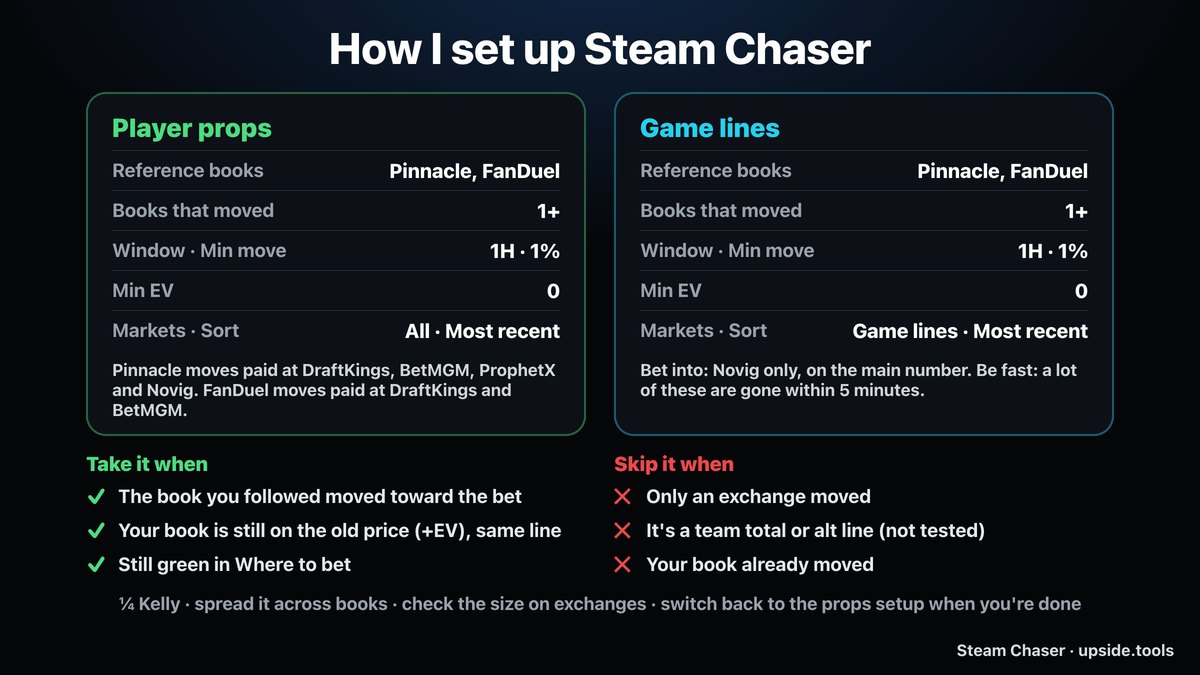
Steam Chaser on Upside watches every price change, and as soon as a sharp book moves, it shows which of your books are still on the old number and how much EV is left. Here is a setup that matches the backtest:
1. Pick your books. Check only the books you can actually bet at, so every play on the board is one you can take.
2. Set the reference books to Pinnacle and FanDuel, with books that moved set to 1 or more. You can add the exchanges for more plays, but in the test they did no better than a normal +EV bet.
3. Use a 1 hour window and a 1% minimum move, and set Min EV to 0, because after a Pinnacle move even the small edges beat the close most of the time.
4. Sort by Most recent. The freshest moves are the ones the slow books haven't caught yet.
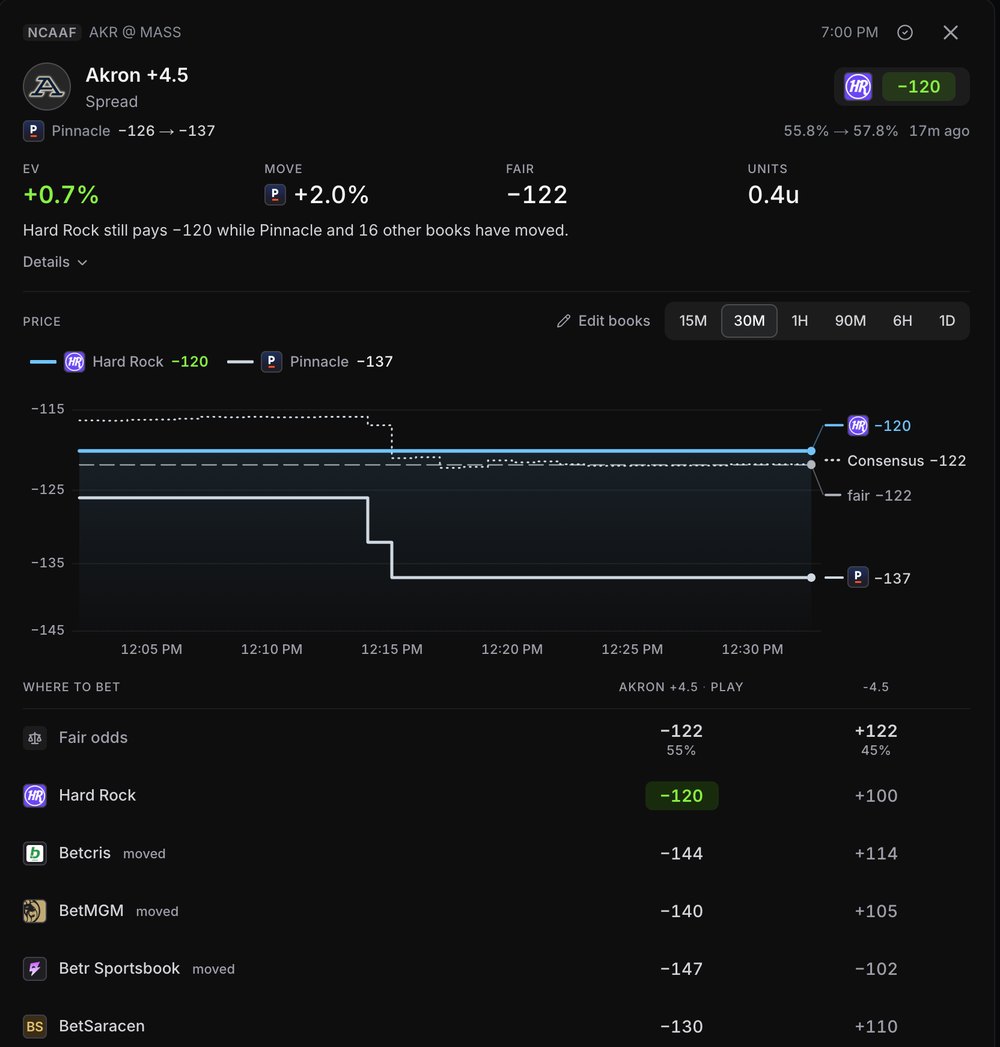
5. Click a play to see its price chart and the Where to bet table. The book highlighted in green is the one still on the old price.
6. For game lines, keep Pinnacle and FanDuel as references. The slow book is usually Novig, so take the main number only and move fast, because a lot of these are gone within minutes.
Check three things before you bet a steam play
First, the book you follow moved toward the bet. Second, your book is still on the old price, at +EV, on the same line. Third, it is still green in Where to bet. If all three are yes, bet it, and be quick about it. If any one is no, skip it, because a moved price or a different line means the edge is already gone. The free odds screen is a fast way to double check every book's current price on the same game.
Is Steam Chaser free?
Yes, during early access. Enter your email on the Steam Chaser page to unlock it, with no credit card. The free odds screen is free as well, and the two work well together: Steam Chaser finds the move, and the odds screen shows every book's price on that game.
Frequently asked questions
What is steam chasing in sports betting?
Steam chasing is betting the old price at a slow sportsbook right after a sharp book moves its line. When sharp money hits, books like Pinnacle move first, and slower books often keep the old price for a few minutes. That old price is the bet.
Does steam chasing actually work?
In a backtest of 281 games from October 10 to 28, 2026, +EV old prices at six US sportsbooks beat the closing line 76.9% of the time right after Pinnacle moved toward the bet, across 1,547 plays. The same bets with no Pinnacle move beat the close 64.9% of the time.
Which sportsbooks should you follow for steam?
Pinnacle first and FanDuel second. In the test, exchange moves on Novig, Kalshi or ProphetX did no better than a normal +EV bet unless Pinnacle had moved too.
How long does a steam move last?
Not long. After a Pinnacle move, the median time until the old price was gone was 2.7 minutes at Fanatics, 3.8 at Caesars, 15.8 at FanDuel, 18.1 at DraftKings and 38.6 at Hard Rock, and 45.7% of old prices were gone within 15 minutes.
Will sportsbooks limit you for steam chasing?
They can, because books know what steam chasing looks like. Betting small, around a quarter Kelly, and spreading bets across several books keeps accounts open longer.
Is Steam Chaser free?
Yes, Upside's Steam Chaser is free during early access. You enter your email to unlock it, and no credit card is needed.